NEO W&D: guided weighing and dispensing, verified as it happens
Dispensing is where a formula becomes physical — and the easiest place to put the wrong material or the wrong amount into a batch. Guide the operator item by item on a connected scale, verify material, lot and tolerance as they weigh, and build genealogy from source lot to finished batch.


Manual dispensing is a common source of deviations and rework. NEO W&D connects directly to scales, enforces target and tolerance, and verifies the right material, lot and container at every step.
Every gram is recorded against the batch, giving full genealogy from raw material to finished product.
The step where a batch is easiest to get wrong
Dispensing is where a formula becomes physical. Every raw material a batch needs is weighed out, one at a time, from a specific lot, into a specific container — and a mistake here is not a paperwork problem, it is the wrong amount of the wrong material inside a product.
Done against a printed formula and a generic balance, the whole step rests on the operator: reading the target, choosing the right lot, reading the scale, writing the number down, and not confusing this material with the one beside it. It works most of the time, and the times it does not are expensive to find and hard to prove either way.
NEO W&D turns that into a guided operation. It takes the materials a production order requires, walks the operator through each one on a connected scale, and records what was actually weighed — so the batch starts from evidence instead of from a signature.
One workspace for dispensing
From the home screen the team reaches the board, the production orders and the weighing orders — the whole dispensing operation in one place, tied to the plant it is running in.

What NEO W&D solves
The whole floor of weighing, by state
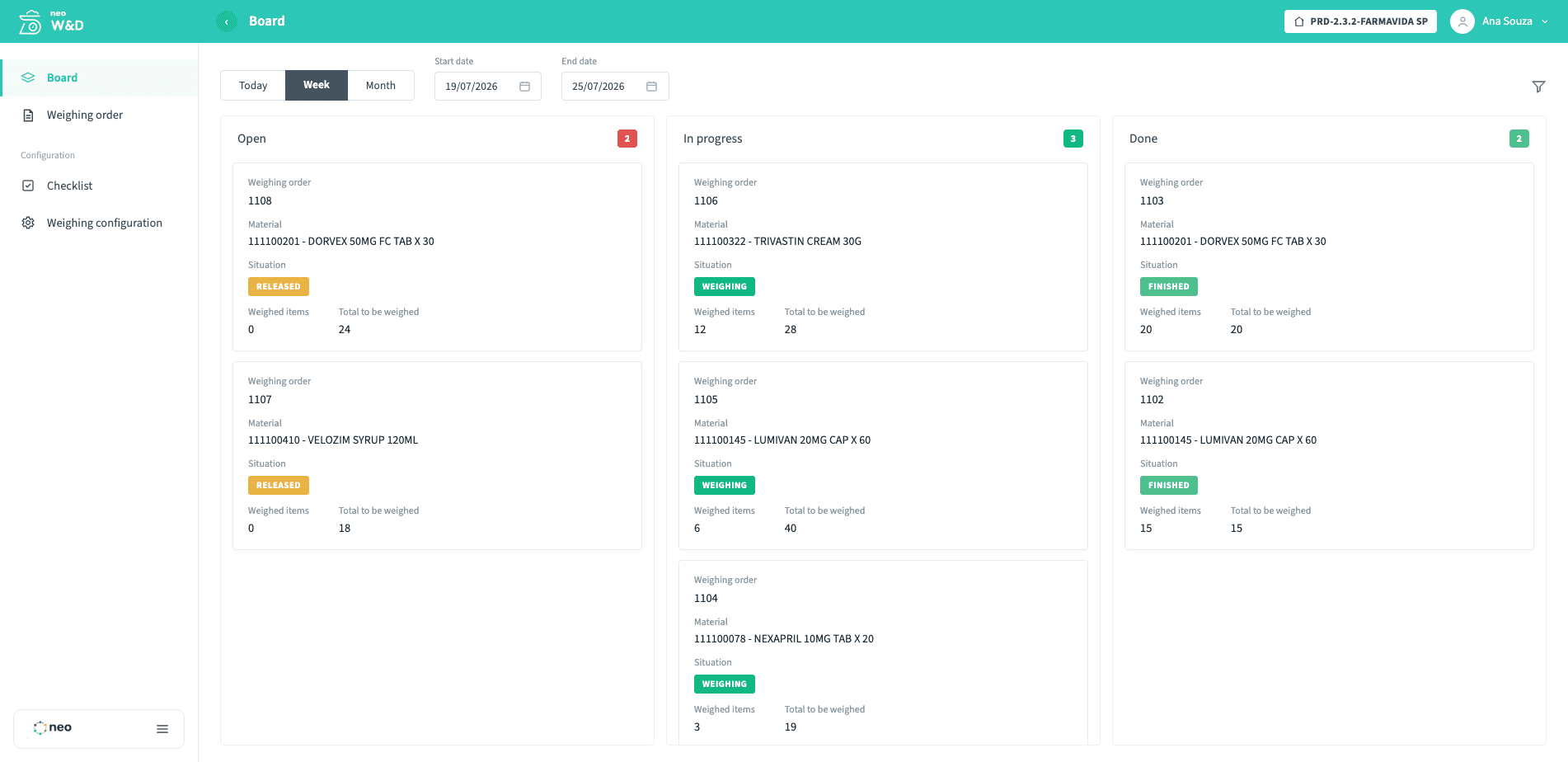
Open, in progress and done — each weighing order shows its material, its situation and how many items are weighed against the total, so the state of dispensing is a board rather than a round of phone calls.
See it running
A walkthrough of a weighing order: releasing it, weighing each material against its target on the connected scale, and closing it with an attributable record.
The check that happens before the weight counts
Before a weight is accepted, three things have to be true: it is the material the formula asks for, from a lot that is still valid, and the amount is inside tolerance. NEO W&D checks all three at the moment of weighing rather than at a review days later.
- Right material and lot — the item is confirmed by scanning the container, so an operator cannot weigh from the drum next to the right one, and an expired lot is caught before it goes in, not in an investigation afterwards.
- Weight from the scale, not the keyboard — the value is read from the connected balance after a tare, so there is no transcription and no rounding a target into existence.
- Inside tolerance, or it does not pass — each item carries its target and an allowed range; an out-of-range weight is flagged where it can still be corrected.
This is the difference between a formula that tells the operator what to do and a system that confirms it was done. The batch record then inherits a set of weighings that were checked as they happened — the same distinction data integrity draws between evidence and a later assertion that everything was fine.
Every weighing order, tied to its production order
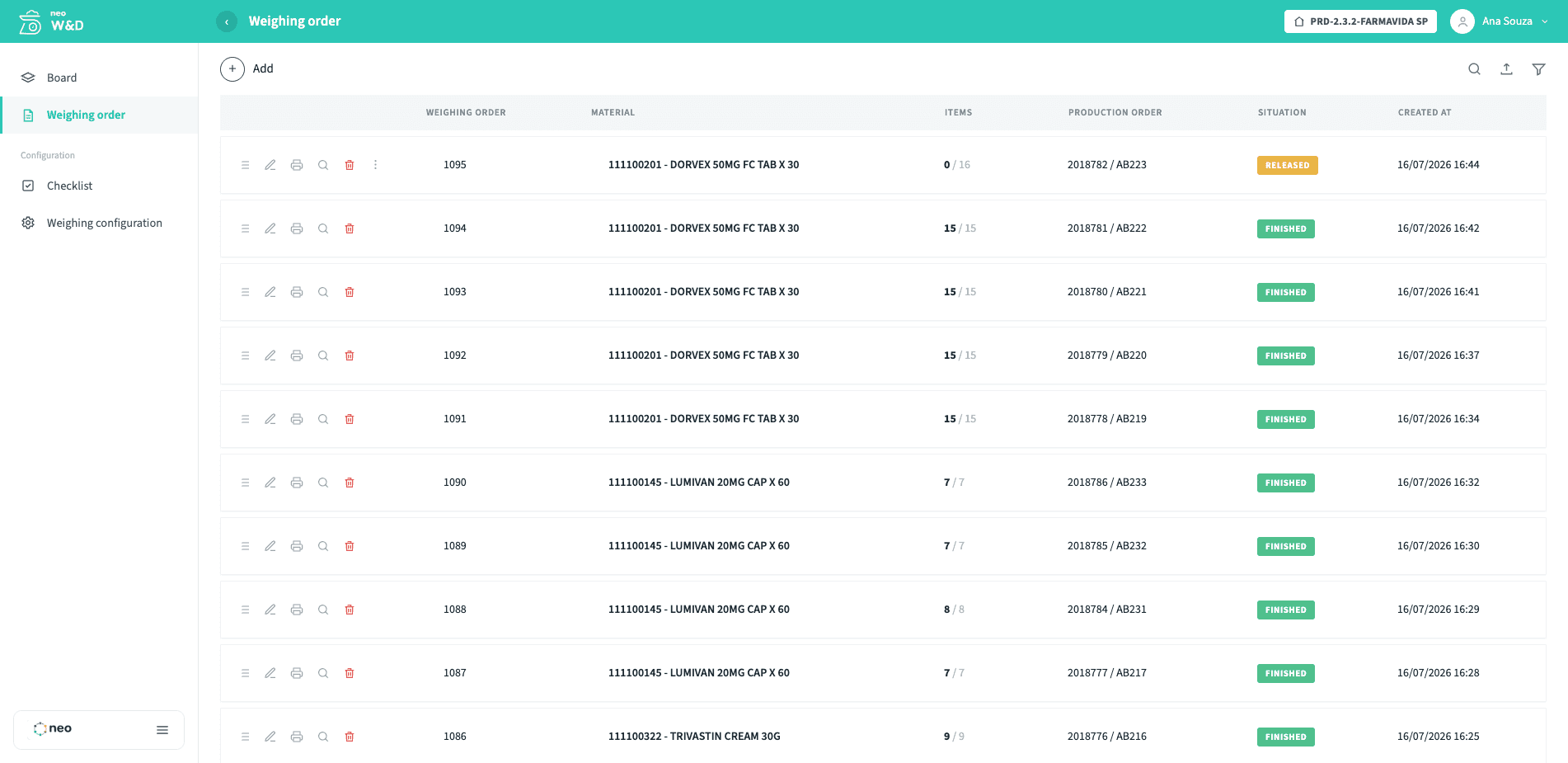
Orders listed with their material, weighed-versus-total items, the production order they serve and their situation — released, weighing or finished — so what is left to dispense is a filter, not a search through paper.
Item by item, against a target
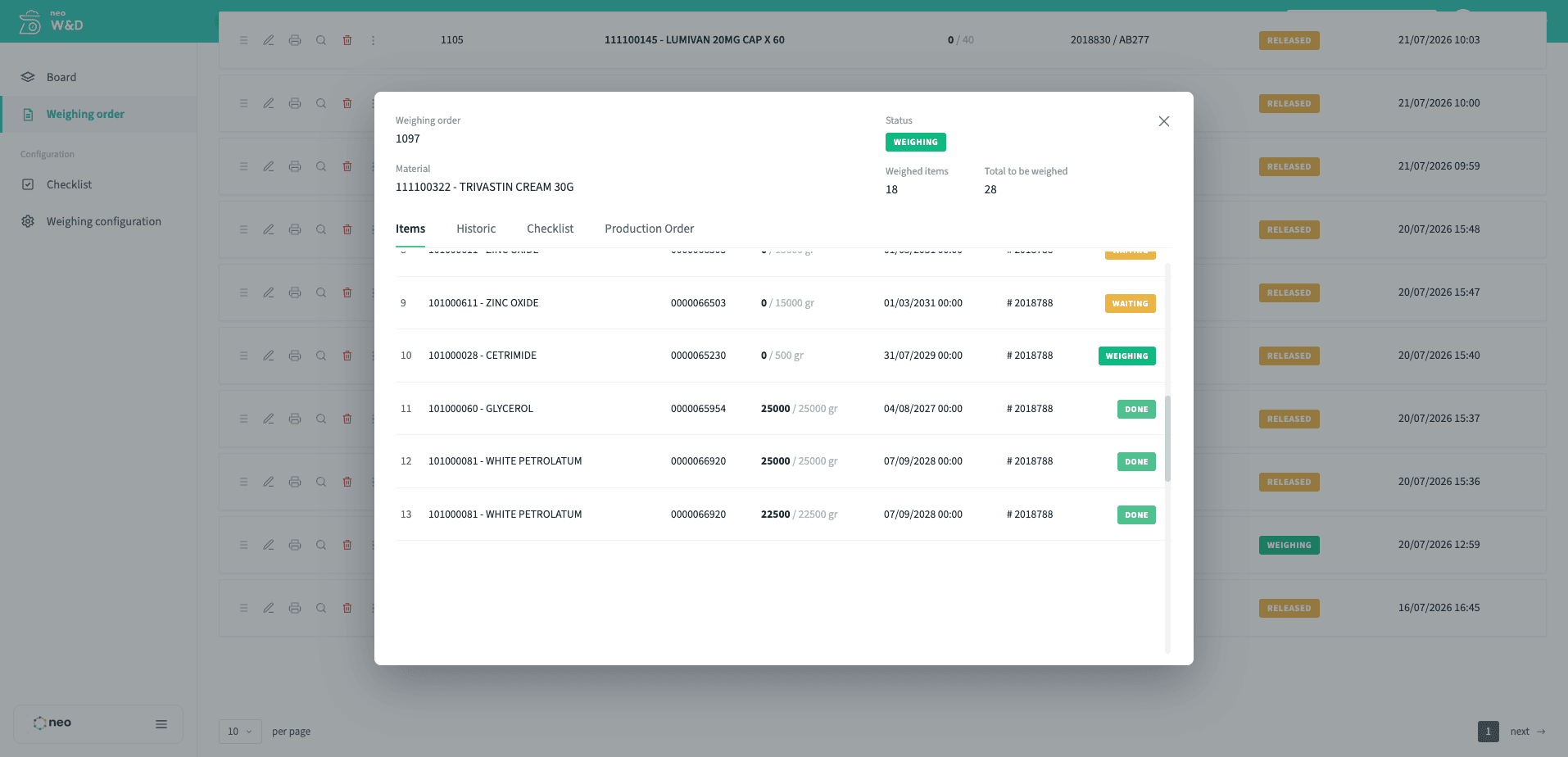
Inside an order each material carries its lot, its weighed-versus-target amount in grams, an expiry date and a status of waiting, weighing or done — the operator follows the list while the system holds the tolerance and the lot.
From material lot to batch, without retyping
Traceability in dispensing is a chain: a supplier lot of a raw material is weighed into a container, that container carries a label, and the material inside it ends up in a finished batch. Break the chain anywhere and a recall has to widen from one batch to a guess.
NEO W&D keeps the chain intact by construction. Each weighing links the source lot, the amount, the operator and the moment to the weighing order, and the container it goes into is labelled and can be sealed and aggregated — so the genealogy from incoming material to outgoing batch is a query, not a reconstruction.
Where a task depends on a measured condition of the balance itself, NEO PI supplies it from the instrument, and the readiness of the weighing booth and its equipment is governed by NEO TASK — so a batch is not dispensed in a room whose cleaning has lapsed.
An attributable history of the weighing
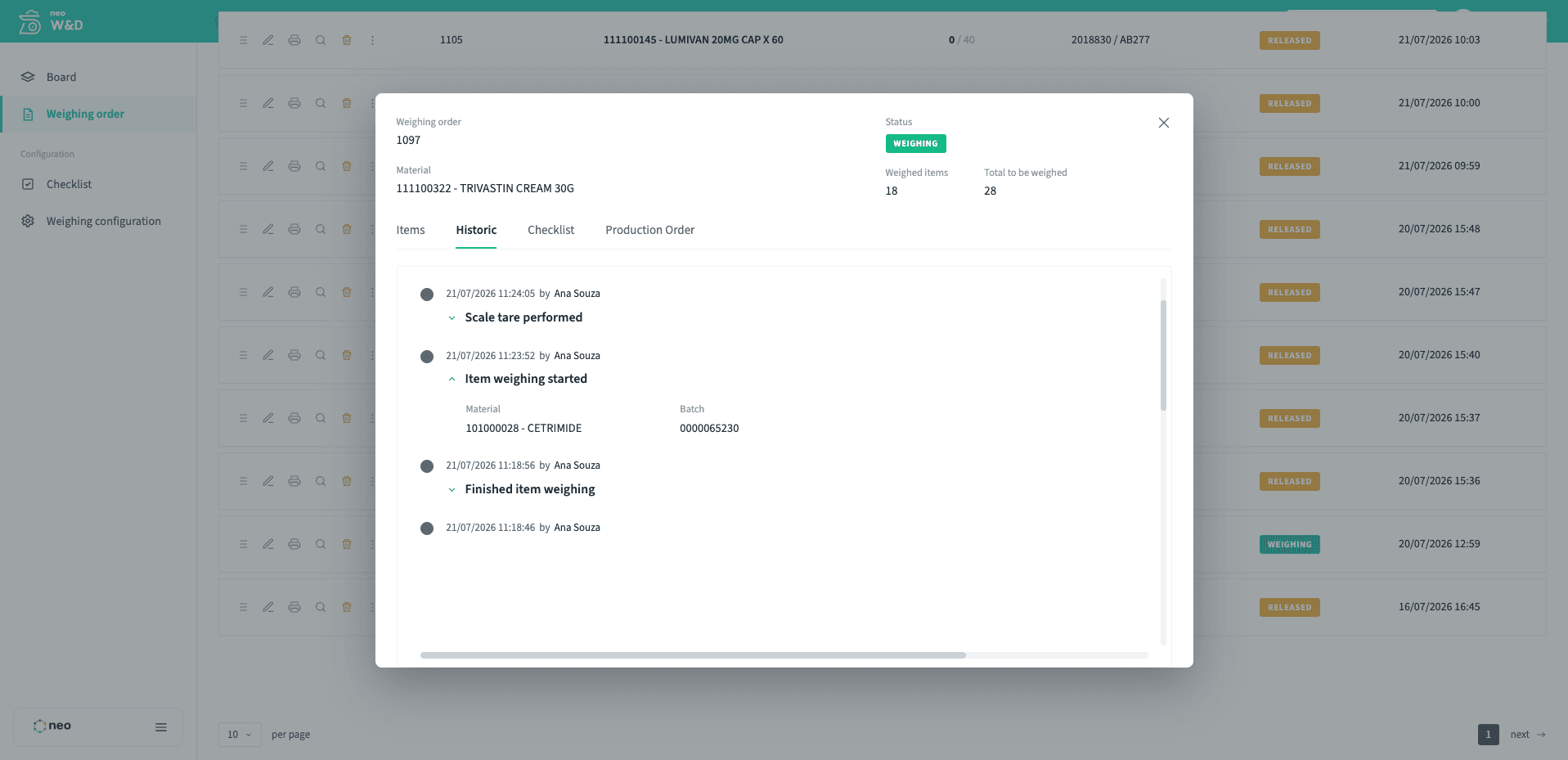
Every action — scale tare performed, item weighing started, item finished — is written to the order with the material, the batch, the operator and the moment, so the dispensing of a batch is evidenced rather than asserted.
The material, its lot, the amount, the scale, the operator and the moment — if that answer lives on a printed formula with handwritten weights, that is the gap. Talk to our team about guiding and recording dispensing.
What it covers
Materials routed to the right booth
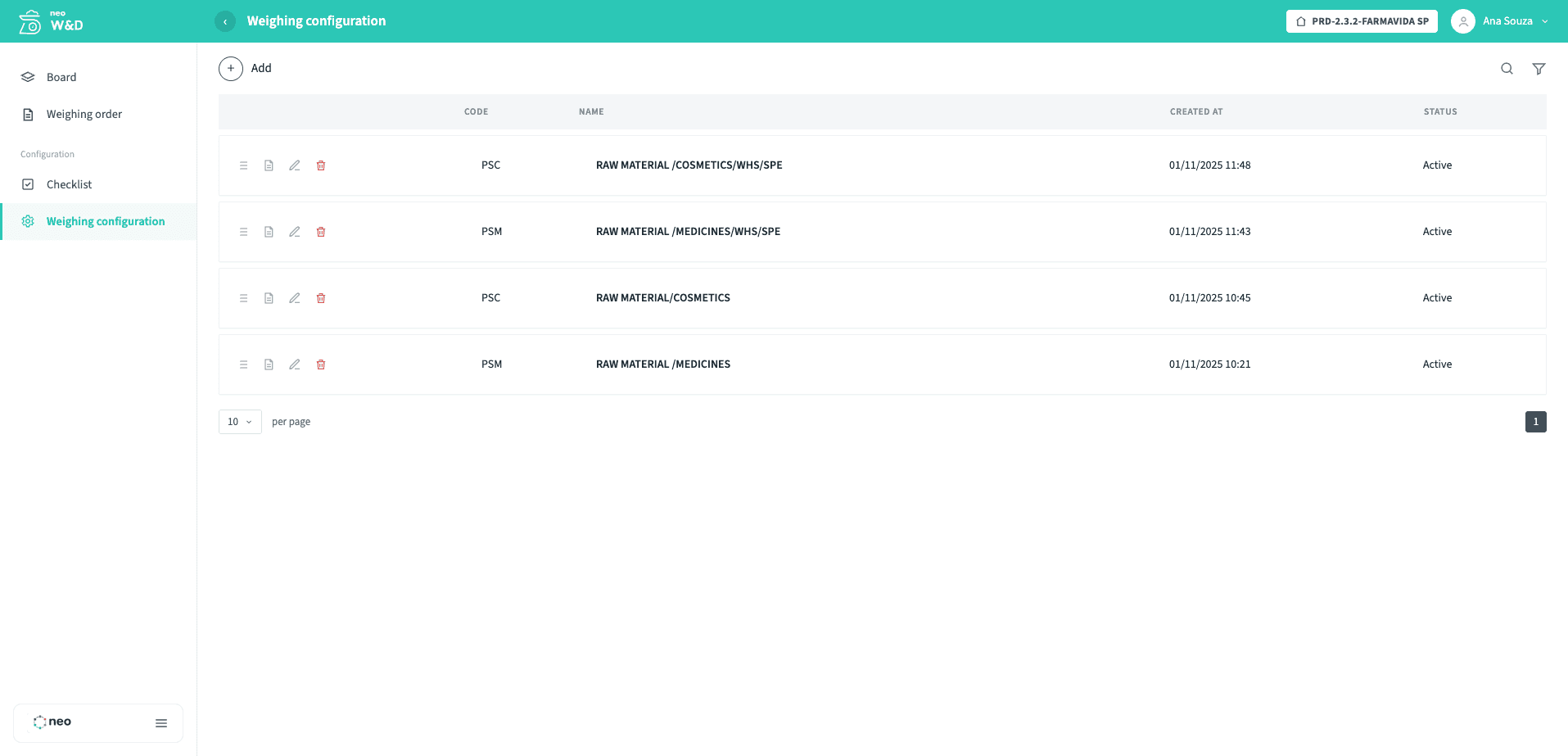
Weighing configurations group materials — raw material for cosmetics, for medicines, for special storage — so each is dispensed under the rules and in the area it belongs to.
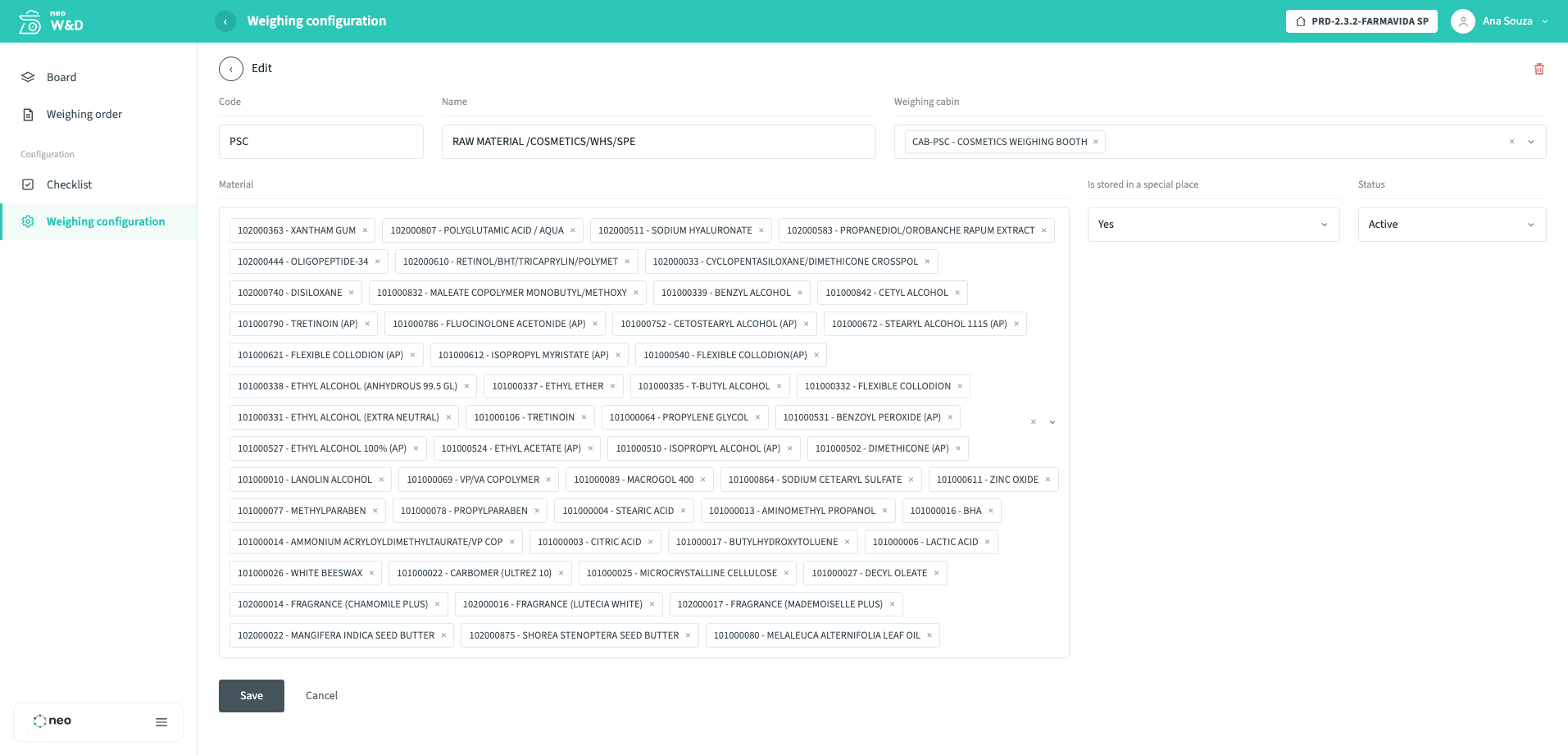
A material list bound to a weighing cabin
Each configuration binds its materials to a specific weighing cabin and records whether they are stored in a special place, so an operator weighs the right material in the right booth by construction, not by memory.
How a weighing order moves
- Order created from productionmaterials and targets listed, ready to weigh
- Item by item, on the scalematerial and lot confirmed, tare taken, net weight captured
- Into a labelled containereach weighing labelled, sealable and aggregable
- Within toleranceout-of-range weights flagged where they can be fixed
- All items weighedattributable record closed and handed to the batch
Typical applications
What each team gains
- Verification, not trustMaterial, lot and tolerance checked by the system at the moment of weighing makes the control structural instead of procedural.
- Genealogy on demandFrom incoming lot to finished batch, traceable both ways without reconstructing it from sheets.
- A guided task, not a memory testThe operator is walked item by item with the target in front of them, so the workload is following a flow, not carrying the formula in their head.
- Fewer deviations at the sourceCatching the wrong material or an out-of-tolerance weight before it enters the batch removes the most expensive class of dispensing error.
- Recalls that stay narrowPrecise genealogy means a suspect lot points at exactly the batches it touched, not a cautious over-recall of everything nearby.
Where NEO W&D sits
NEO FLOW schedules the production order and the materials it consumes; W&D dispenses those materials against their targets and hands back exactly what was weighed, from which lot, by whom.
The NEO EBR records the batch and can point at every weighing as evidence, while NEO TASK keeps the weighing room and its scales in a released state. Together they are the dispensing layer of Digital Compliance.
Frequently asked questions
Where do the weighing orders come from?+
From a production order and its material composition. NEO W&D generates a numbered weighing order listing every item to be weighed with its target, so dispensing is driven by what the batch actually needs rather than a re-keyed formula.
How does it connect to the scale?+
The balance is read directly through a scale protocol, tare is recorded per item, and the captured net weight becomes the value on record. Because the weight is not typed, transcription and rounding errors are removed from the step.
What is a campaign?+
Several weighing orders for the same material merged into one, so the material is weighed once for the whole run instead of order by order. The system only allows it for orders of the same material and keeps the split traceable to each batch.
How does it relate to NEO FLOW, EBR and TASK?+
FLOW schedules the order and the materials it consumes; W&D dispenses them and returns exactly what was weighed and from which lot; EBR records the batch and points at those weighings as evidence; TASK keeps the weighing room and its scales in a released state. They share one resource and material model, so the chain is continuous.
The material, its lot, the amount, the scale, the operator and the moment — if that answer lives on a printed formula with handwritten weights, that is the gap. Talk to our team about guiding and recording dispensing.