NEO VLMS: computerized system validation software
NEO VLMS manages the computerized system validation lifecycle for life sciences organizations. It is a GxP validation platform that centralizes user requirements, risk analysis, IQ/OQ/PQ protocols, execution, evidence, signatures and reports, from URS to validation report.
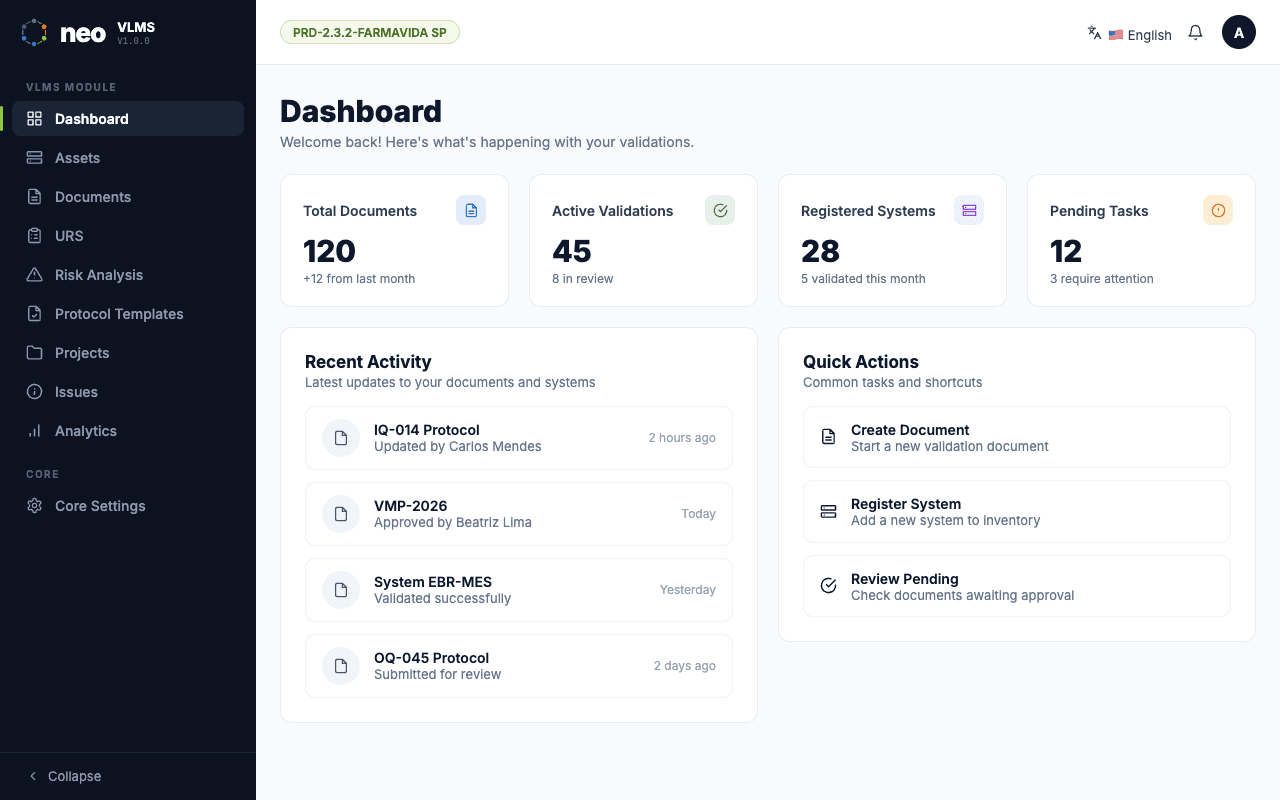
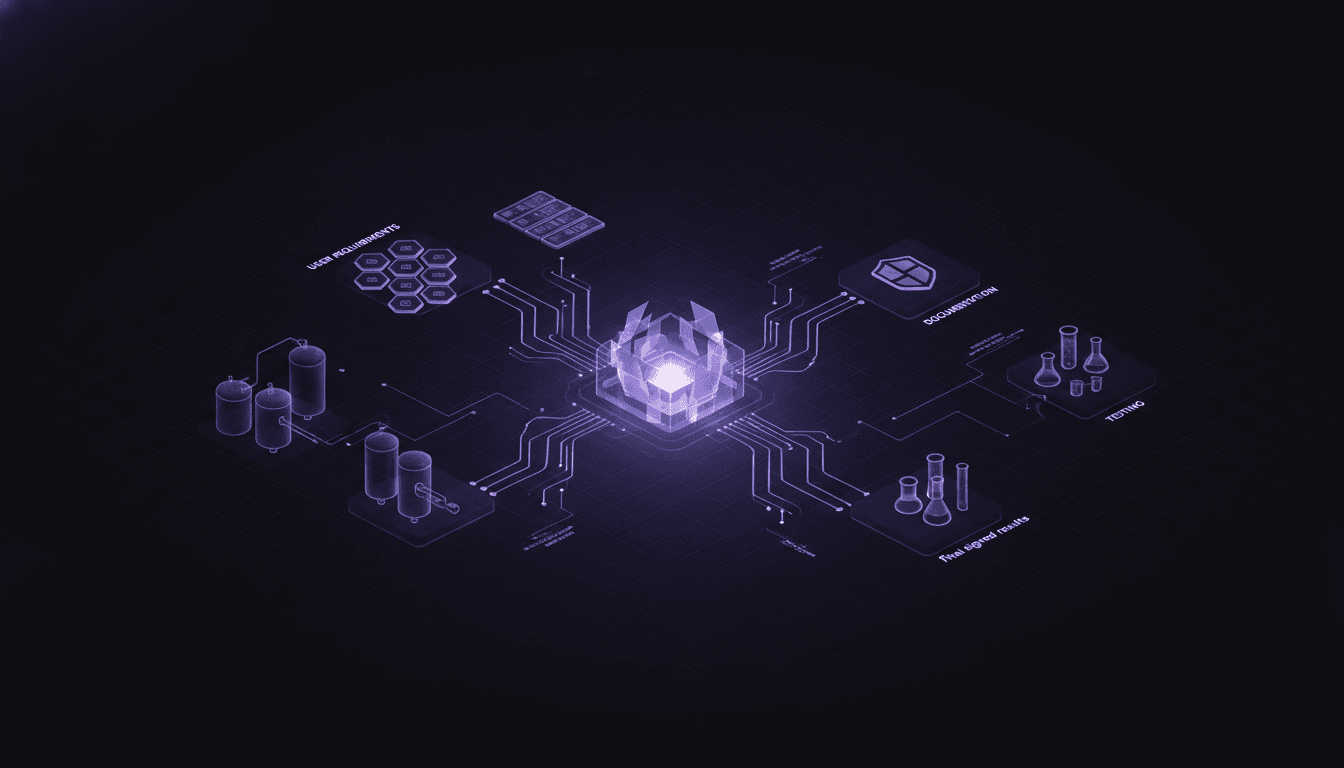
NEO VLMS replaces scattered documents, spreadsheets and wet-ink signatures with a digital, traceable process — a single place where each system or piece of equipment keeps its requirements, risks, tests and evidence.
Every requirement flows through to the evidence that proves it: URS requirement → risk (FMEA) → test case (IQ/OQ/PQ) → signed result → coverage. That chain is read as a requirements traceability matrix and rolled up into the validation report, so any requirement can be followed to the signed result that closes it.
CSV and CSA: documented evidence and risk-based testing
Computerized system validation (CSV) — also called computerized systems validation — organizes the documented evidence that a system meets its intended use. Computer Software Assurance (CSA) prioritizes critical thinking and risk-proportionate testing, so effort goes where it matters most.
NEO VLMS helps you structure that work — requirements, risks, tests, evidence and approvals — in one place, whether you follow a traditional CSV approach or adopt risk-based CSA practices. How each approach is applied still depends on your procedures and judgment.
What your team gains with NEO VLMS
The whole validation lifecycle on one platform
Each stage feeds the next, and traceability runs through the whole chain, from requirement to signed evidence.
- URSRequirements with criticality and GxP impact
- Risk (FMEA)S × O × D → RPN, keyed to requirements
- IQ / OQ / PQTest cases with acceptance criteria
- ResultsActual result, deviations, evidence — signed
- Coverage & PDFTraceability matrix and validation report
Why digitize computerized system validation
On paper, validation is slow and fragile: protocols are retyped, signatures are chased across desks, and traceability is a spreadsheet someone maintains by hand. When an inspector asks how a requirement was proven, the answer can take days to assemble.
NEO VLMS makes the record electronic and the traceability automatic. It is part of T2’s digital compliance approach, and pairs naturally with a CSV and GAMP 5 program that has moved off paper.
Manage the URS and user requirements
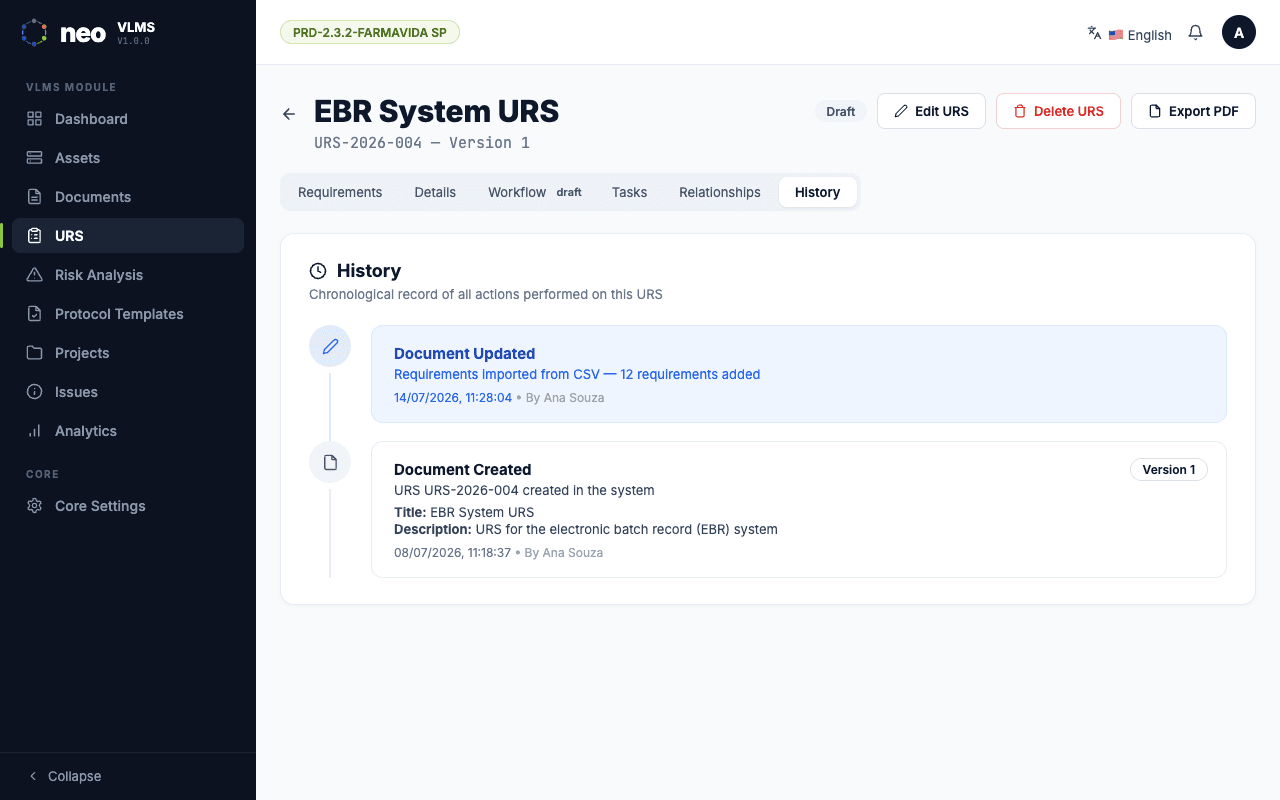
Build the User Requirements Specification (URS) with structured, testable requirements, then version and sign it in a controlled workflow — so each requirement is ready to link to its risks and its tests.
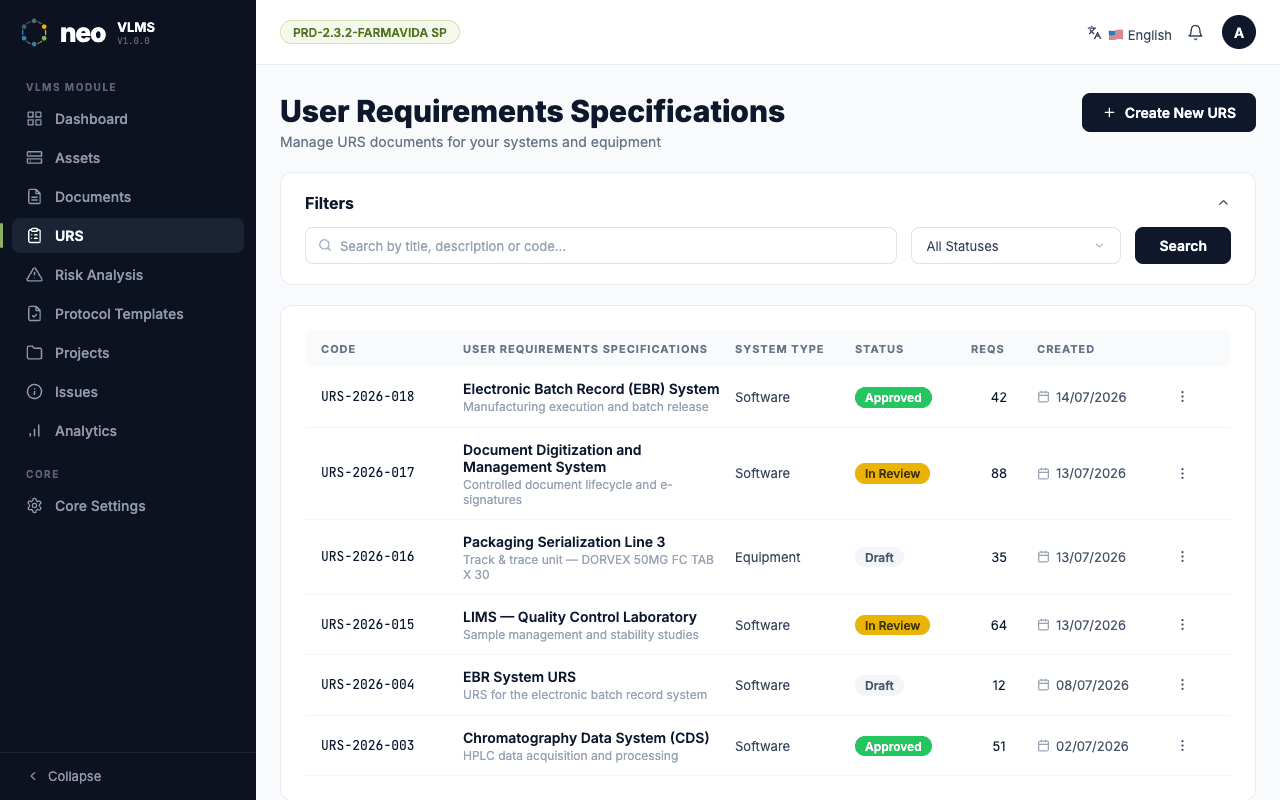
Structured, traceable, signed requirements
Analyze risk with FMEA
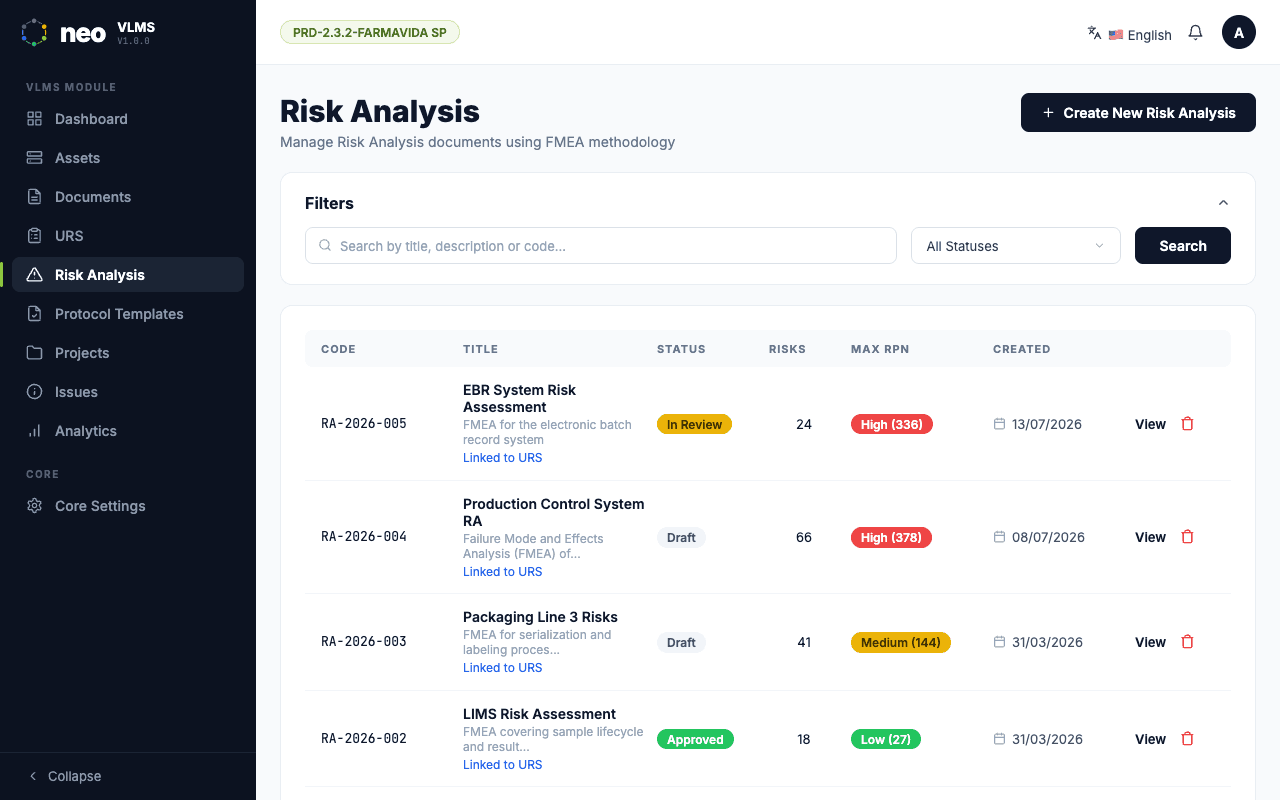
Score each risk by Severity, Occurrence and Detection; the RPN (risk priority number) is computed automatically and links back to the URS requirement it addresses, so testing focuses where risk is highest.
Build and reuse IQ/OQ/PQ protocols
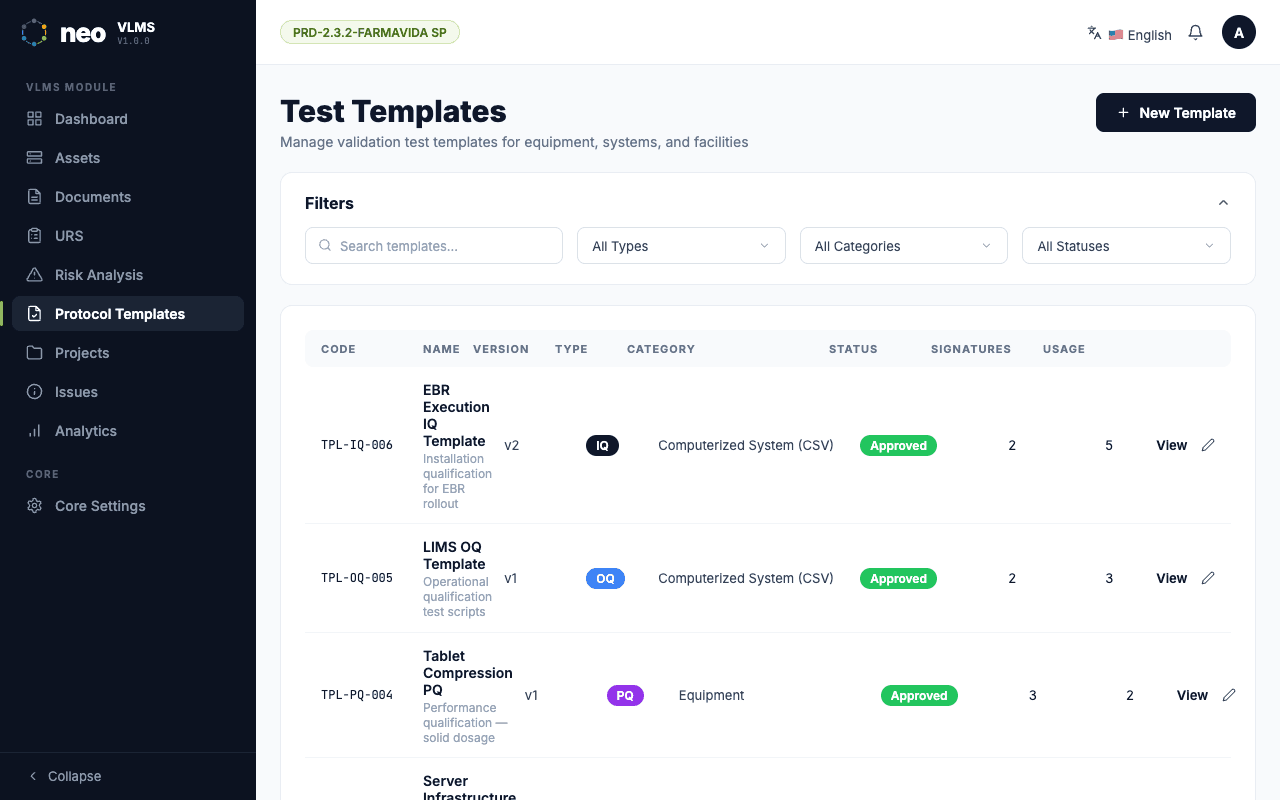
Author protocol templates with sections, test cases and acceptance criteria, and reuse them to cut repetitive writing, standardize acceptance criteria and speed up new validation projects. Version, clone, mark obsolete and instantiate a project from a template.
Run validation projects
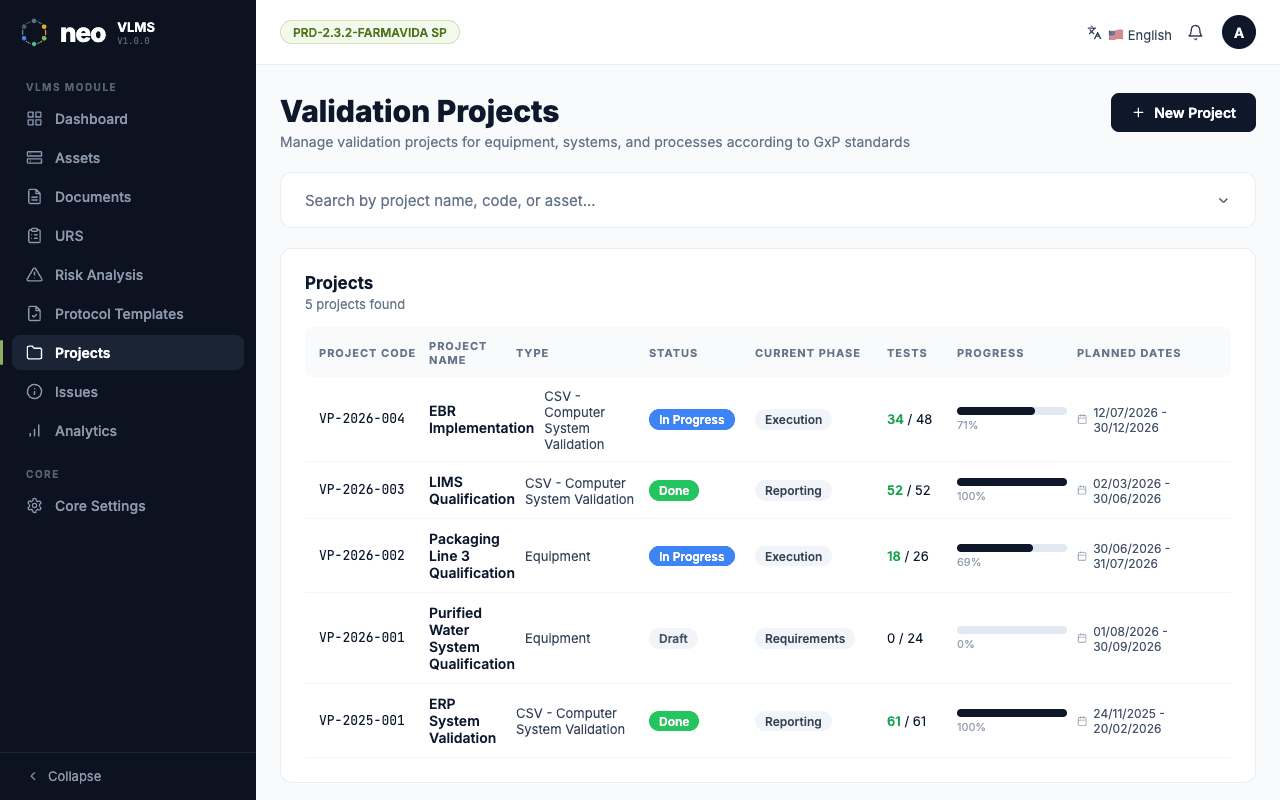
The project brings together assets, URS, protocols and team, defines the documents it requires, and executes test cases with their actual result, deviations and evidence.
Keep requirements traceability
Control documents and evidence
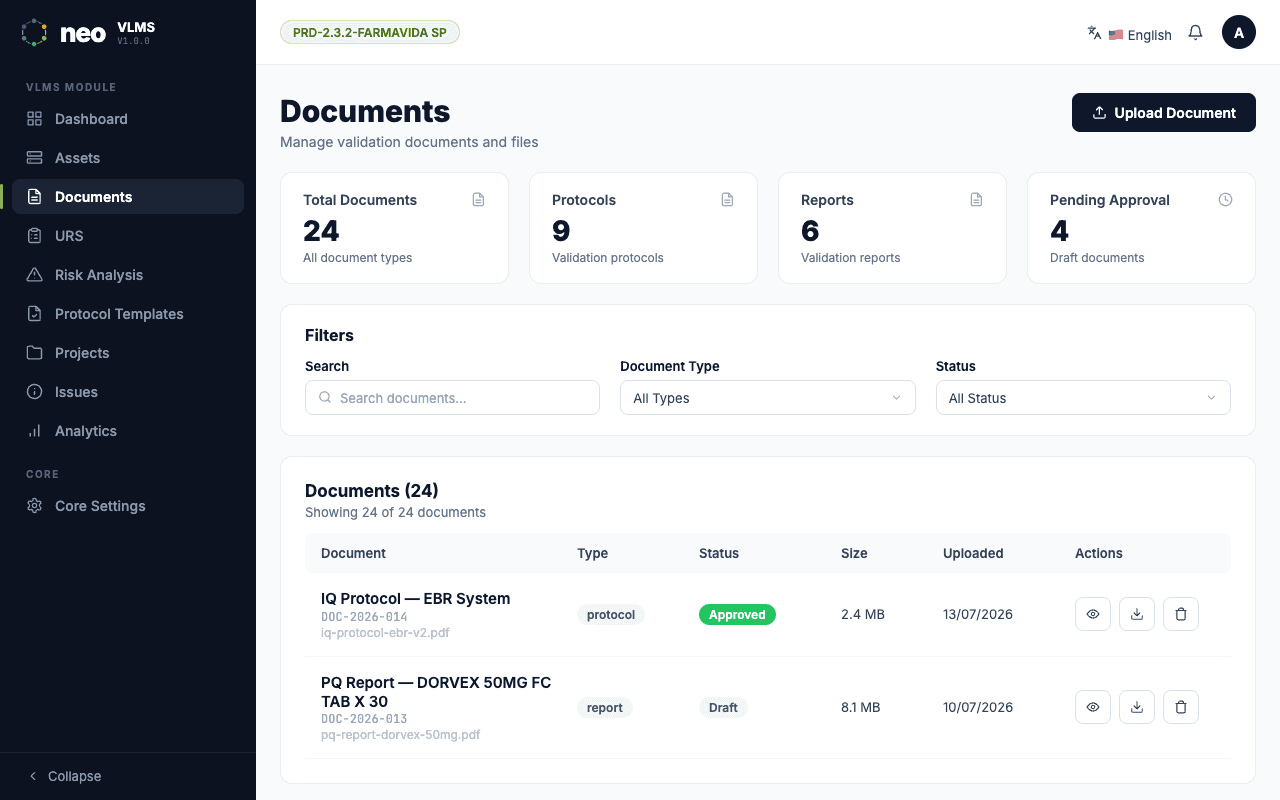
Upload specifications, manuals, protocols and evidence with versioning, validity and effective dates, an approval workflow and signed addenda. Expiry alerts warn owners before a document lapses, so no evidence is left uncovered.
Manage approvals and electronic signatures
Approval flows are configured per organization. Every transition that needs sign-off records an electronic signature before it advances, and multi-approver gates wait until every required approval is in. Each signature is written to the audit trail.
Built for regulated life sciences environments
NEO VLMS in your compliance framework
NEO VLMS is the validation backbone of the NEO platform: it shows that the systems you run in production were built and tested against their requirements. It sits alongside the operational modules — for example, once a system like NEO EBR is validated here, its electronic batch records inherit a documented validation history.
Final compliance does not depend on software alone: it depends on your configuration, on the validation of the system itself, on your procedures and on how your organization uses it. NEO VLMS centralizes the documentation and evidence needed to sustain that compliance and respond to audits more readily, within a digital compliance and CSV and GAMP 5 approach.
Who NEO VLMS is for
- A defensible recordSigned approvals and a verifiable audit trail that support your inspection readiness.
- Less paperworkReusable protocol templates, cloning and execution in place of retyped Word protocols.
- Systems inventoryEvery computerized system and asset registered, with its validation state in view.
- Traceability on demandFollow any requirement to the signed evidence, and export it as a controlled PDF.
Frequently asked questions
What types of systems and equipment can NEO VLMS manage?+
Computerized systems (software) and equipment or processes: any asset that needs a documented, risk-based validation with IQ/OQ/PQ evidence. Each one is kept in the inventory with its validation state in view.
How does NEO VLMS support 21 CFR Part 11 requirements?+
Approvals are signed electronically and each signature is recorded — name, UTC date and time, meaning and IP — before the record changes. The audit trail is append-only and hash-chained, with on-demand integrity verification. Final compliance depends on your configuration, validation and procedures.
Does NEO VLMS validate a system automatically?+
No. NEO VLMS structures and documents the validation work — requirements, risks, protocols, execution and approvals — but the validation is performed by your teams according to your procedures. The platform provides traceability, version control and evidence, not an automatic approval.
How is each organization’s data separated?+
NEO VLMS is multi-tenant: each organization’s data lives in its own database, and access is further scoped by role and by department.
See how NEO VLMS can take one of your validation processes from URS to signed report. In the demo we’ll walk through requirements, risks, protocols, evidence and approvals applied to a case close to your reality.