NEO EBR: electronic batch records for regulated manufacturing
Run the batch procedure as it is approved, not as it is remembered: sequence, limits and verifications enforced while the batch is being made, and a record complete enough to be reviewed by exception.
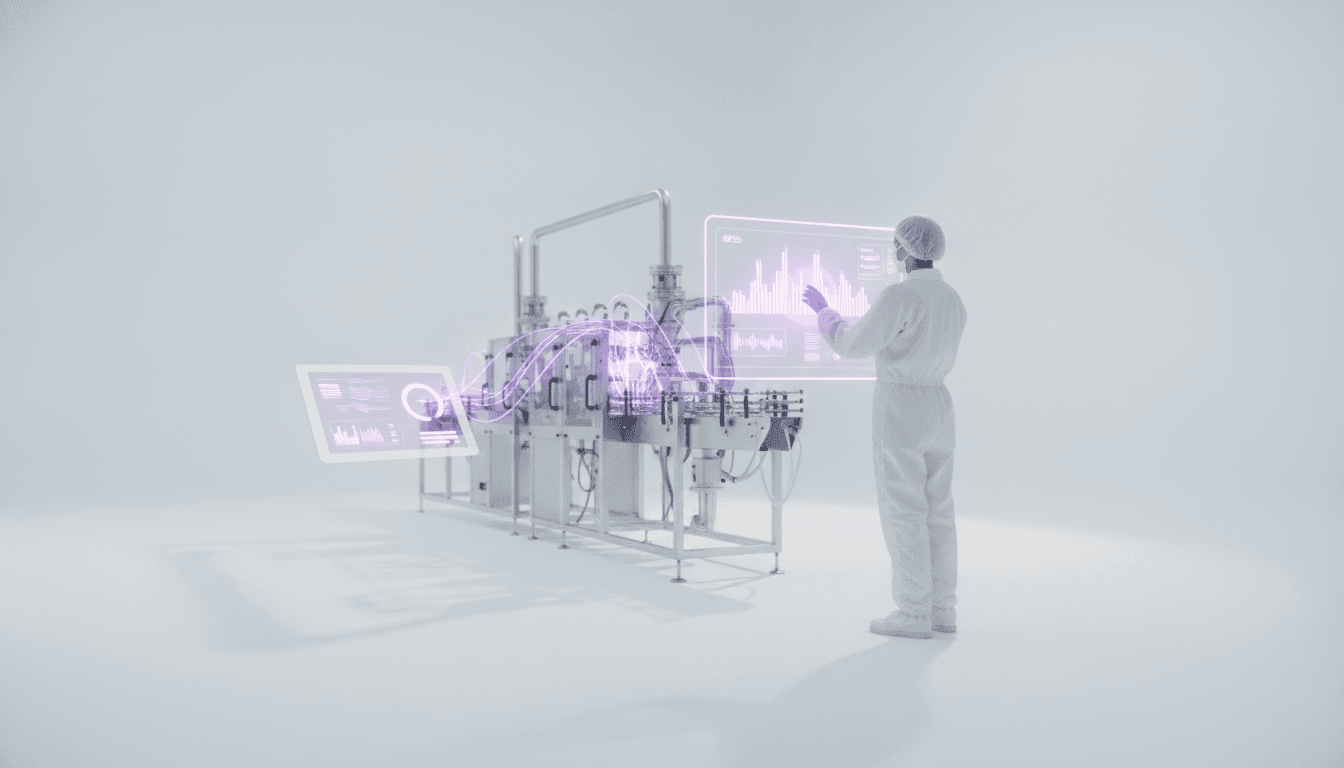

Paper batch records slow release and hide transcription errors. NEO EBR turns the master batch record into an interactive, enforced workflow: mandatory fields, sequence checks and in-line limits catch deviations at the point of execution.
Quality then reviews by exception — looking only at what actually deviated — cutting release from days to hours while keeping a complete, audit-ready trail.
What is an electronic batch record?
An electronic batch record (EBR) is the digital form of the master and executed batch record: the document that instructs how a batch is made and captures what actually happened while it was made. It replaces the paper batch record, and in regulated manufacturing it is the primary evidence a batch was produced according to its approved process.
The distinction that matters is not the format. A scanned PDF is digital and still passive. An EBR is executable: it holds the procedure as a sequence the system enforces, checks entries against their limits at the moment they are made, and requires a second-person verification where the procedure calls for one.
NEO EBR is that record for GxP environments, inside manufacturing execution. It runs procedures and work orders on the floor, reads process values from the historian rather than asking an operator to transcribe them, and produces a record designed to be reviewed by exception rather than line by line.
What digitising the batch record actually covers
Digitising "the batch record" is really four documents, and a project that scopes only the first one tends to leave the paper in place. In a typical pharmaceutical operation the set is:
- The manufacturing instruction — the procedure itself, broken into stages such as weighing, compounding, primary and secondary packaging, and into the steps inside each stage: raw material verification, PPE, area preparation and release, content handling, storage.
- Release and cleaning checklists — including clean-in-place, which gate whether a stage may start at all.
- The occurrence and deviation form — where an operator records what departed from the procedure, at the moment it departed.
- In-process controls — the checks that carry a parameter, a limit and a deadline, and that decide whether the batch is still within specification.
They are one workflow in practice: a checklist gates a stage, the instruction runs it, an in-process control measures it, and an occurrence records where it went sideways. Digitising them separately reproduces the coordination cost that made paper expensive.
A versioned library of master records
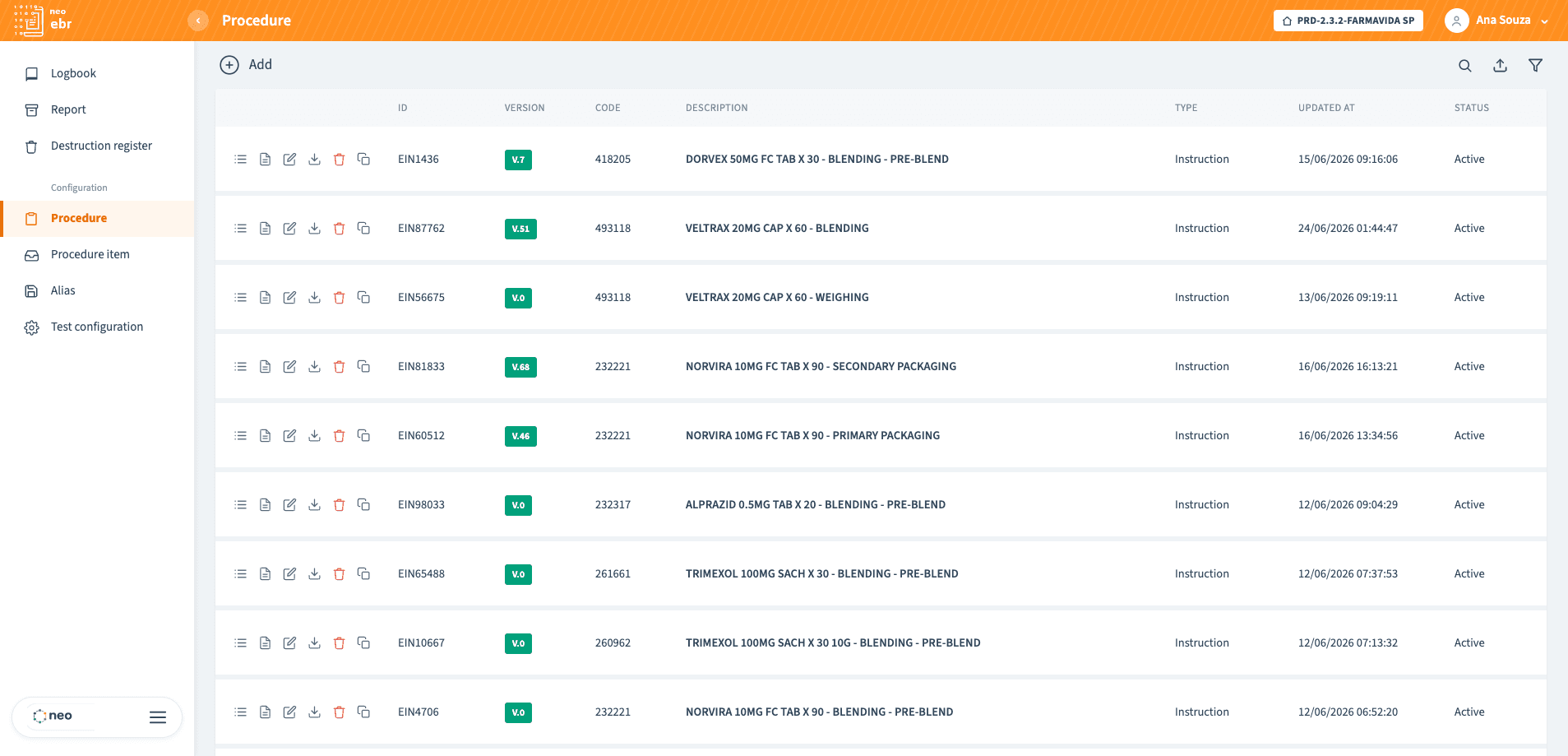
Every manufacturing instruction lives here with its version and status — a pre-blend at V.7, a secondary packaging record at V.68 — so a batch always runs against a specific, change-controlled version rather than whatever was printed that morning.
The procedure, broken into stages and steps
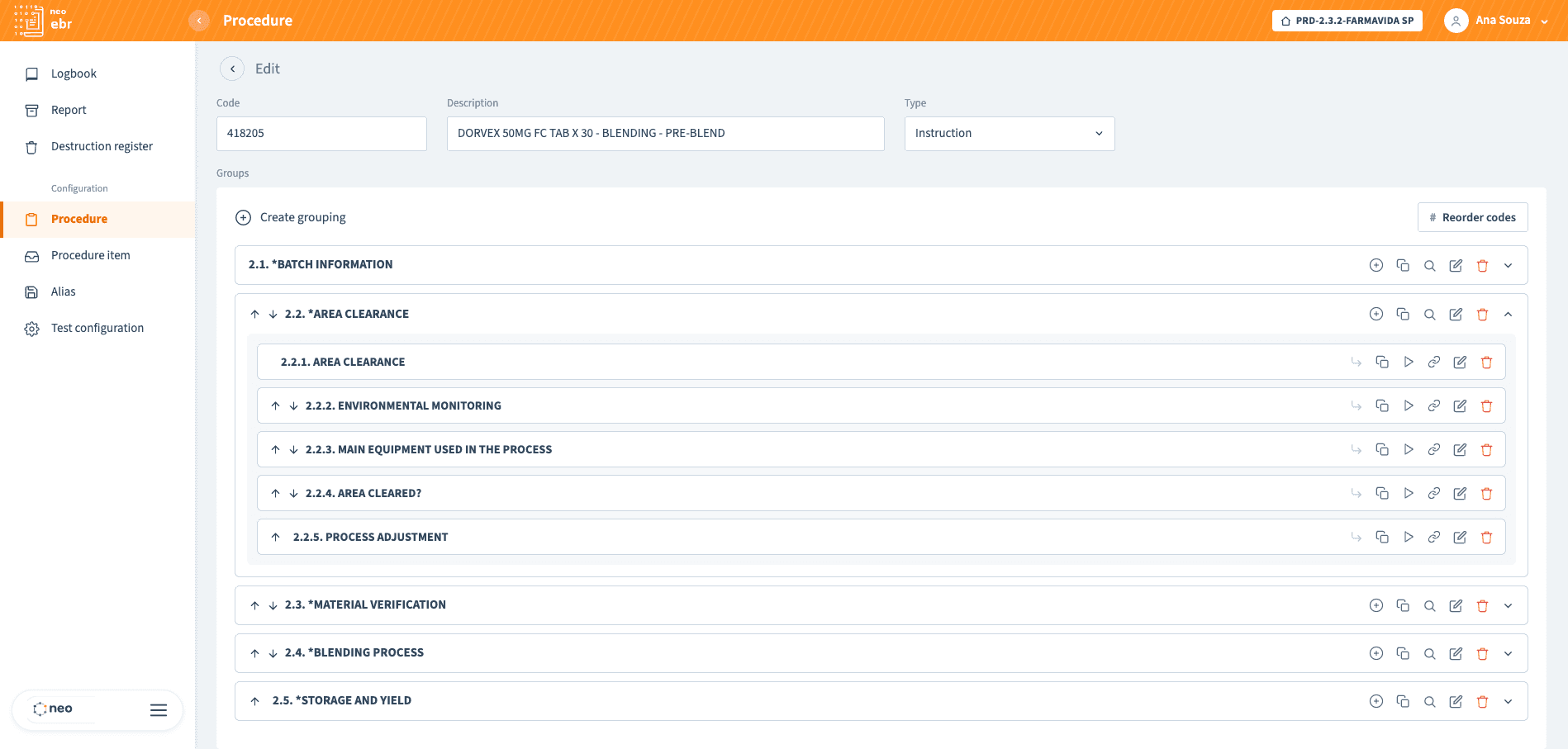
A record is built as stages — batch information, area clearance, material verification, the process itself, storage and yield — and the steps inside each, so the instruction the operator runs is the same structure Quality reviews and an inspector reads.
What NEO EBR solves
See it running
A walkthrough of the batch record in execution: enforced steps, in-process controls and the review that follows.
Enforcement at execution, not correction at review
A paper record cannot tell an operator that a step is out of sequence, that a value is outside its limit, or that a required entry was skipped. Every one of those checks is deferred to a reviewer reading the record after the batch exists — which is why review is exhaustive and why a deviation found there becomes an investigation rather than a prompt.
The cost is not only the checking. A paper batch record passes through five hands before release: a supervisor prints it, operators fill it in, supervision follows the process, an assistant or coordinator checks the entries, and quality approves or rejects. Each handover is a queue, and the record spends far more time waiting than being worked on.
Moving the control to execution time changes four things at once:
- Sequence — steps run in the order the approved procedure defines, and skipping is not available rather than discouraged.
- Limits — an out-of-range entry is caught while the operator is still standing at the equipment, when correcting it is cheap.
- Second-person verification — requested where the procedure requires it, from someone who did not perform the step, and recorded as an attributable act.
- Completeness — a record cannot be closed with a required field empty, so the gap is never discovered weeks later.
That is also the precondition for review by exception: reviewers can look only at what deviated because the system classified the rest, and that classification is only trustworthy if the limits were under change control and the values were not transcribed.
Each step carries its own rules
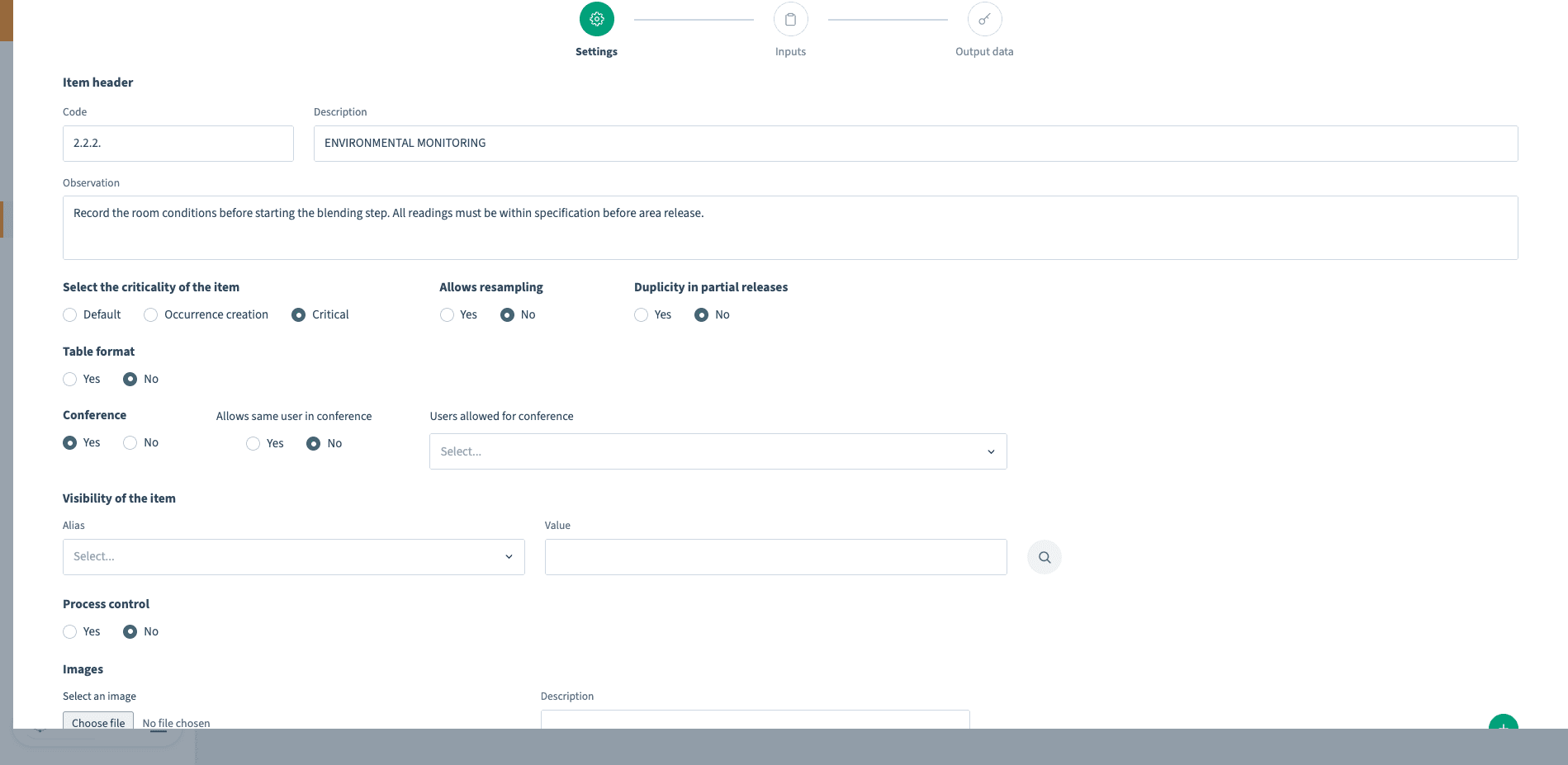
A step declares its criticality, whether it needs a second-person conference and who may perform it, and the conditions under which it appears — so second-person verification and mandatory checks are properties of the procedure, not reminders taped to a machine.
What the operator and the reviewer get
If most of that time is review rather than manufacturing, the record is the constraint. Talk to our team to assess your procedures, your process data and the GxP requirements in scope.
Where the process values come from
This is the design decision that most affects what an EBR is worth, and the one most often left until last. If in-process values are typed by an operator reading a display, the electronic record inherits the weaknesses of the paper one: the timestamp is the typing time, the value is a transcription, and a second person is needed precisely because of that.
When the in-process control reads the measurement from NEO PI, the value arrives with the timestamp the device emitted and the quality code the protocol carried, traceable back to the raw event. The operator confirms instead of transcribing, and a whole class of error — and of verification — stops existing.
A third class of value is neither typed nor read from a device but calculated. NEO EBR lets you define the formulas and equations behind an input — yield, corrected weight, concentration, a potency-adjusted quantity — so the record computes them automatically from the values it already holds, the same way every time, timestamped and traceable to its operands. The manual arithmetic error, and the second person re-checking the math, stop existing too.
The same reasoning applies to material identity and quantity, which is why NEO W&D usually follows as the second record, and to unit-level identifiers, where NEO TRACK links what was shipped back to how it was made.
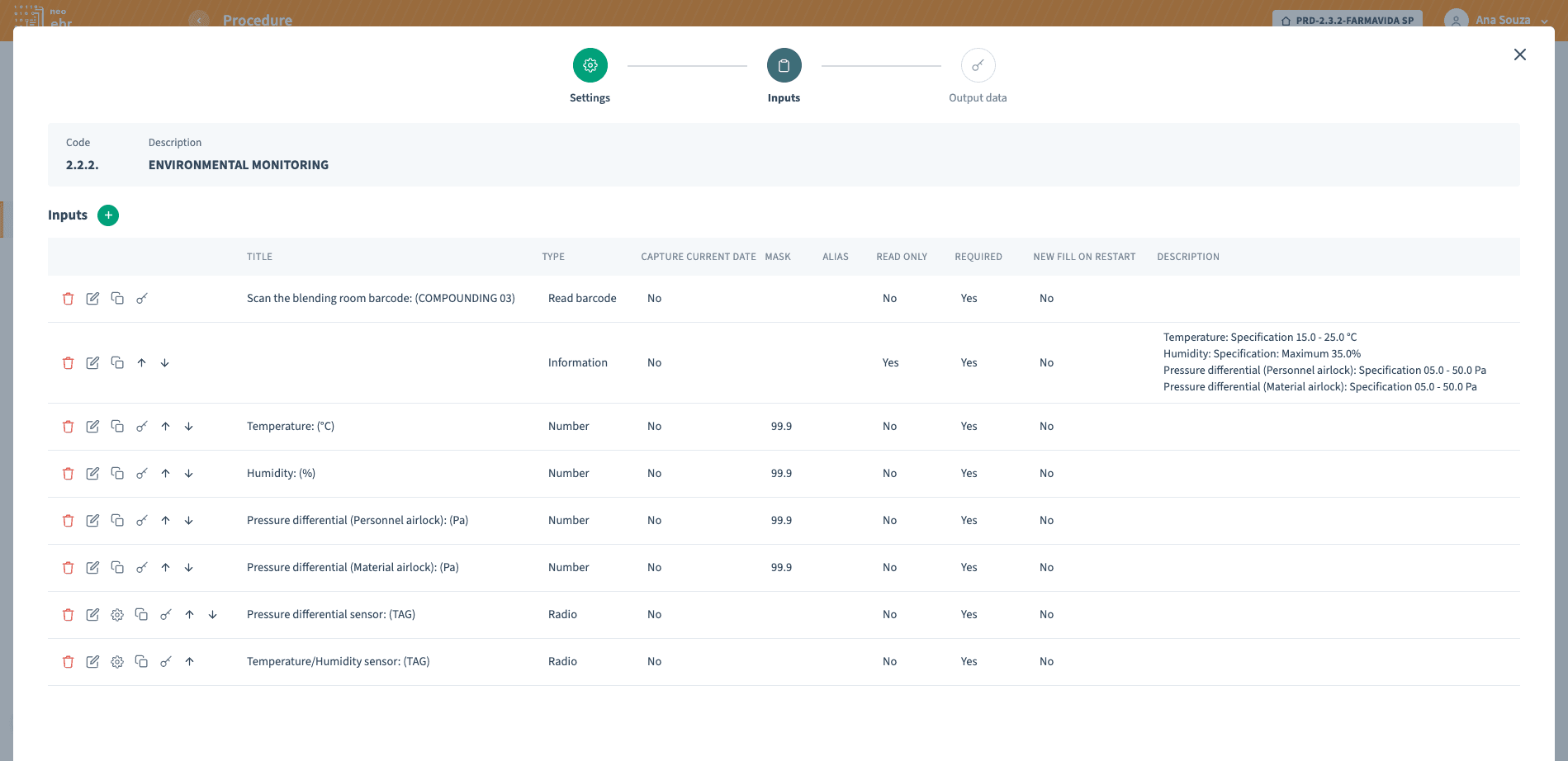
Inputs with their limits, masks and the sensor behind them
Each reading declares its specification — temperature 15–25 °C, humidity max 35%, airlock pressure differentials — its input mask, and the tagged instrument it comes from, so an out-of-spec value is caught at the step and the number can come from the device instead of being typed.
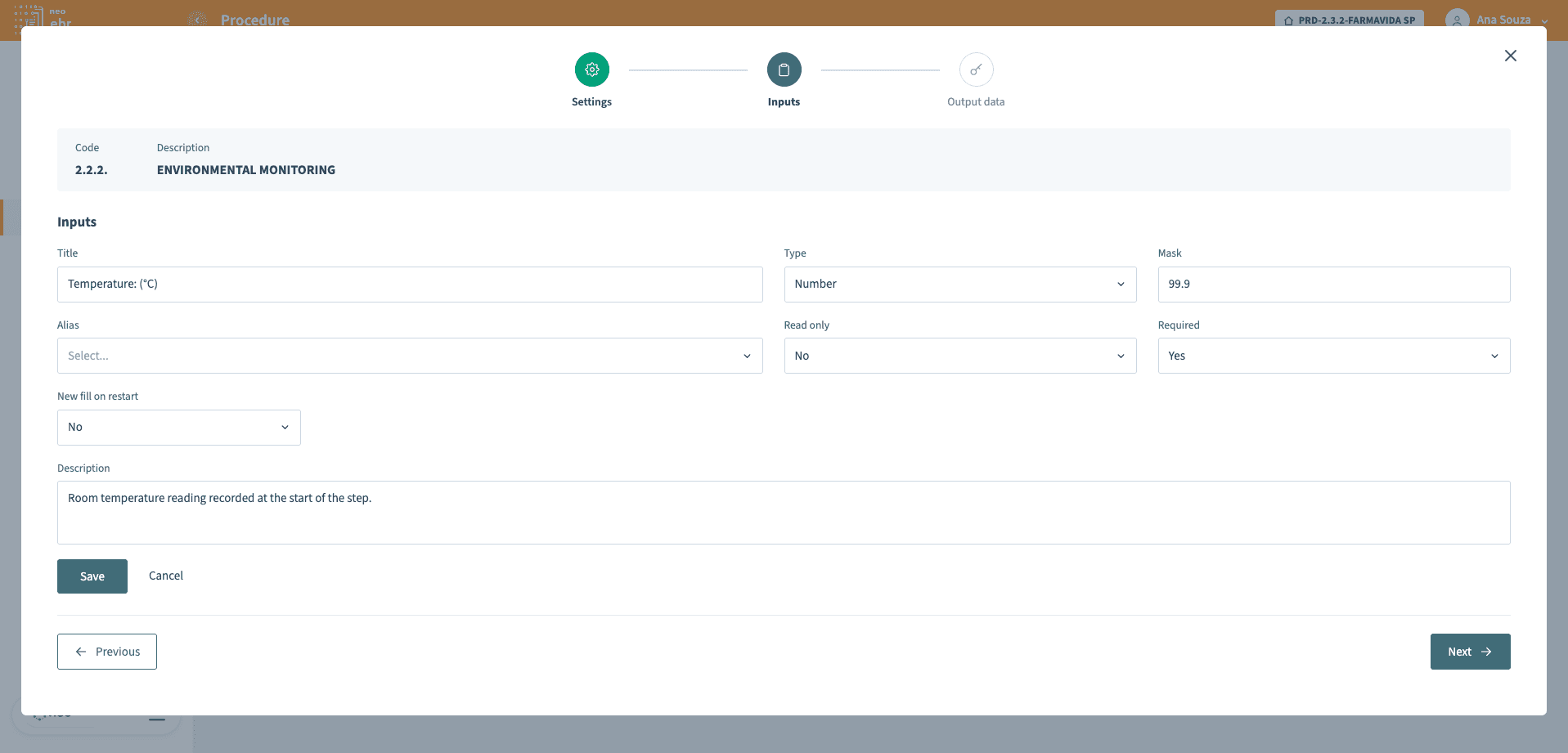
Configured down to a single reading
One input at a time: its type, its mask, whether it is required, read-only, or refilled after a restart. The rigour that makes review by exception trustworthy is defined once, here, under change control.
How a batch moves through the system
- Master recordprocedure, steps, limits — versioned under change control
- Approvalelectronic signature before it can be used
- Work orderthe batch instance, bound to its master version
- Enforced stepssequence, mandatory entries, second-person checks
- In-process controlsvalues read from NEO PI, not transcribed
- Review by exceptionattention on what deviated, not on every line
- Auditable recordhash-chained trail, signatures, versioned procedure
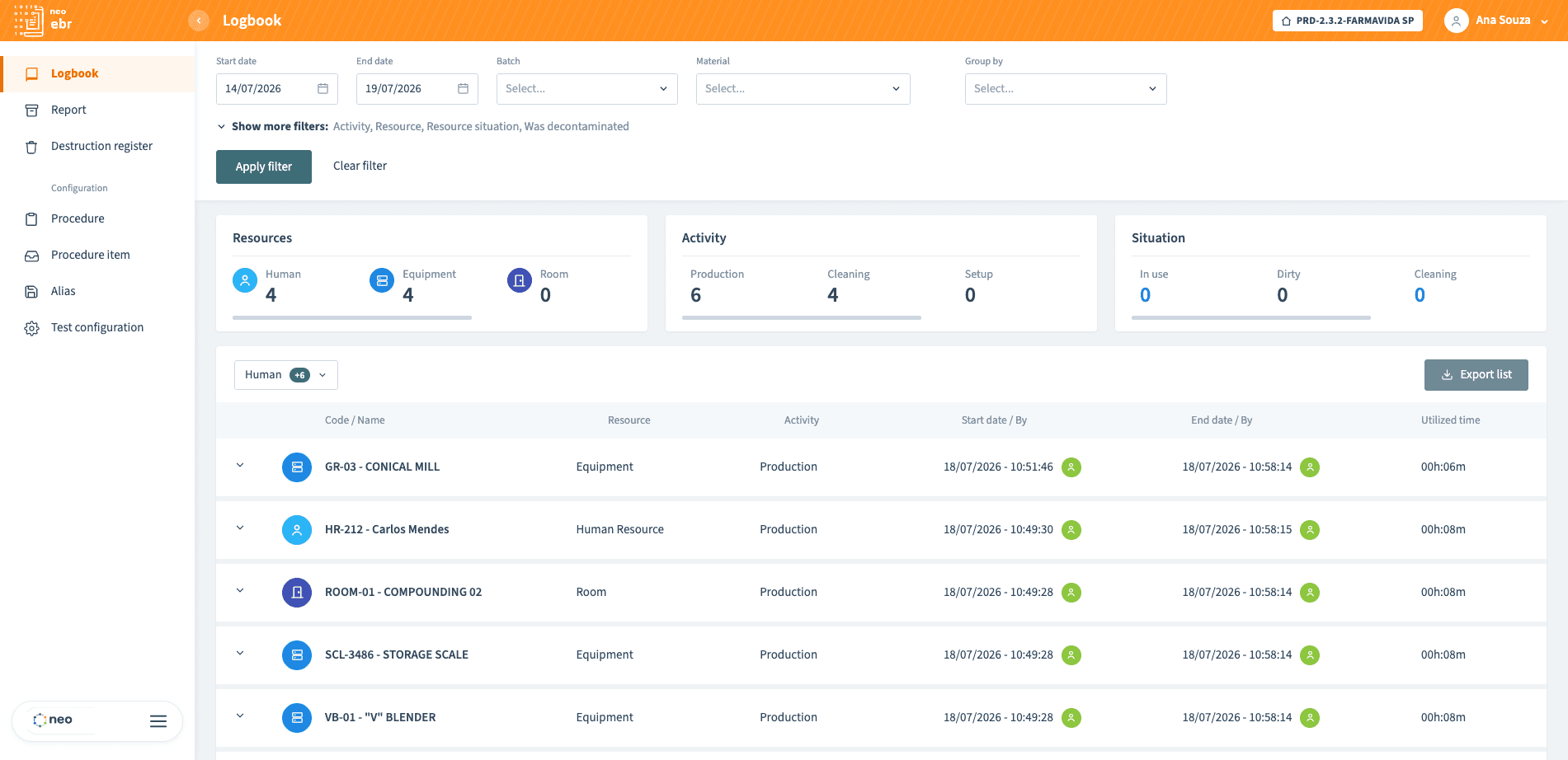
A digital logbook for every resource
Rooms, equipment and people, with what each was used for and for how long, rolled up by resource, activity and situation — the paper logbook per area replaced by one searchable record.
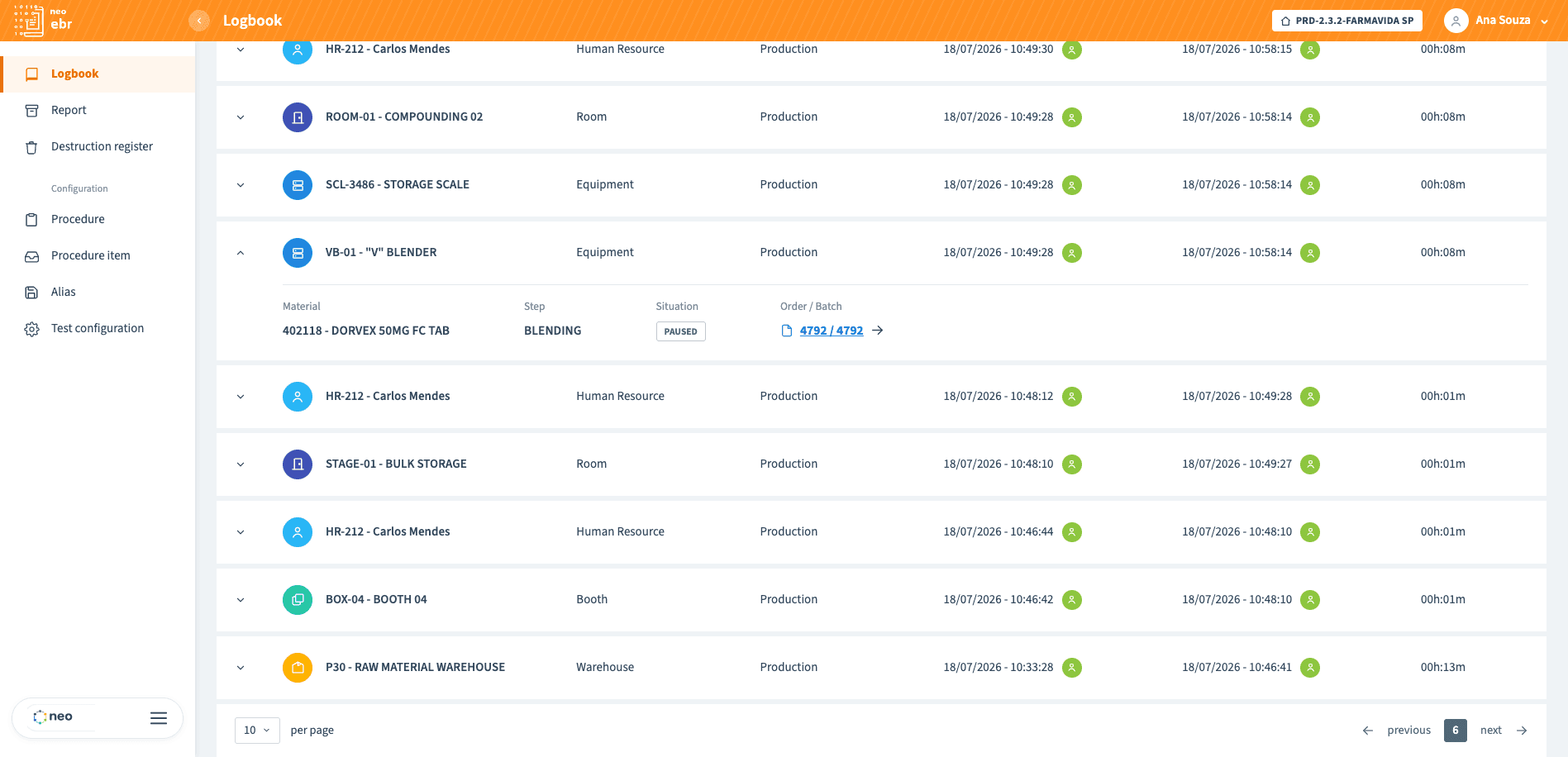
Every use tied to its batch and step
Open a resource and its usage is bound to the order, batch and step it served, with the operator and the exact times — so "what ran on this blender, and when" is a lookup rather than a reconstruction.
Typical applications
Review by exception, on one screen
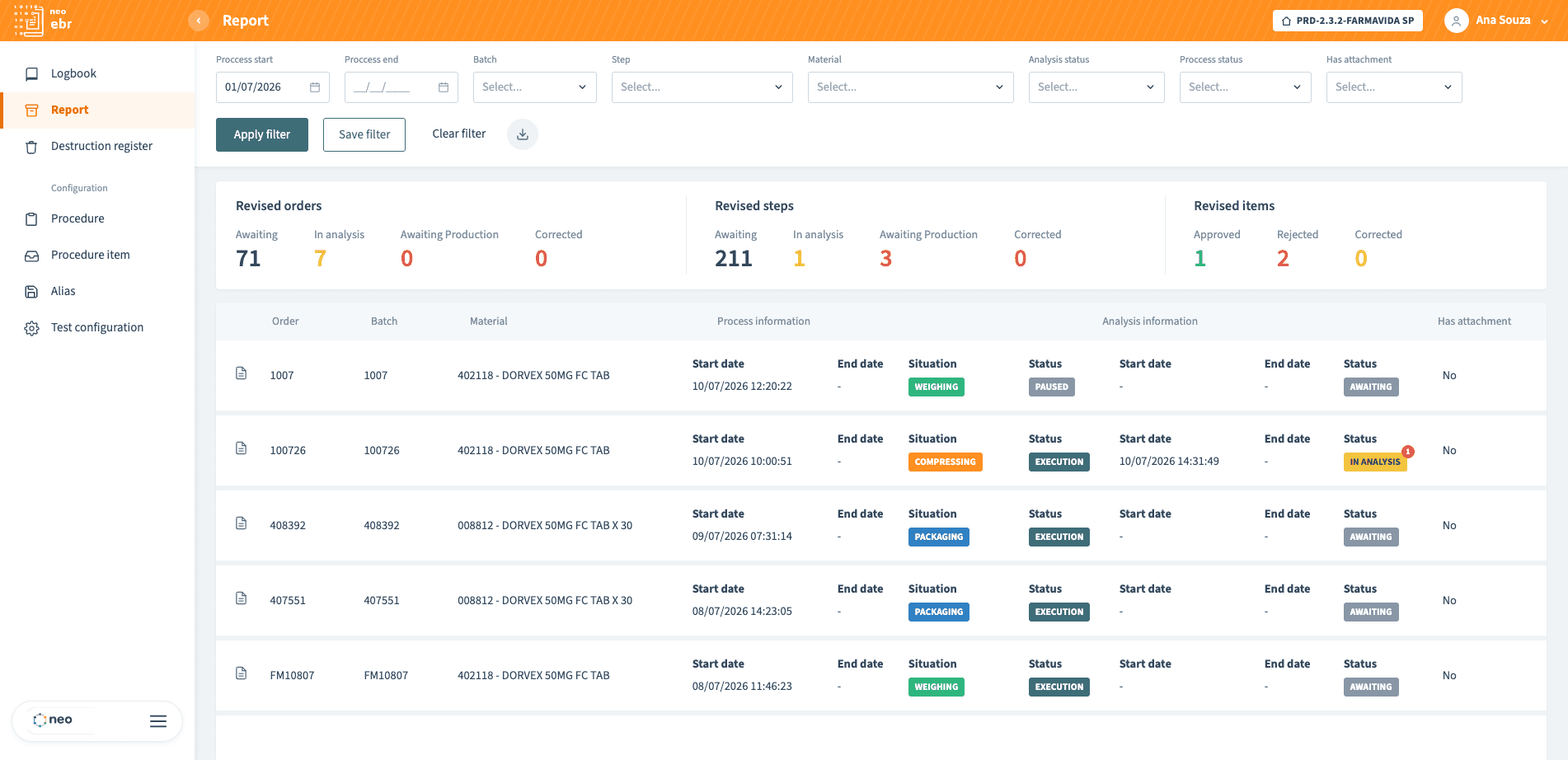
Orders, steps and items grouped by what still needs attention — awaiting, in analysis, corrected — so Quality opens the batches and the steps that deviated instead of reading every line of every record.
Destruction and reconciliation, inside the record
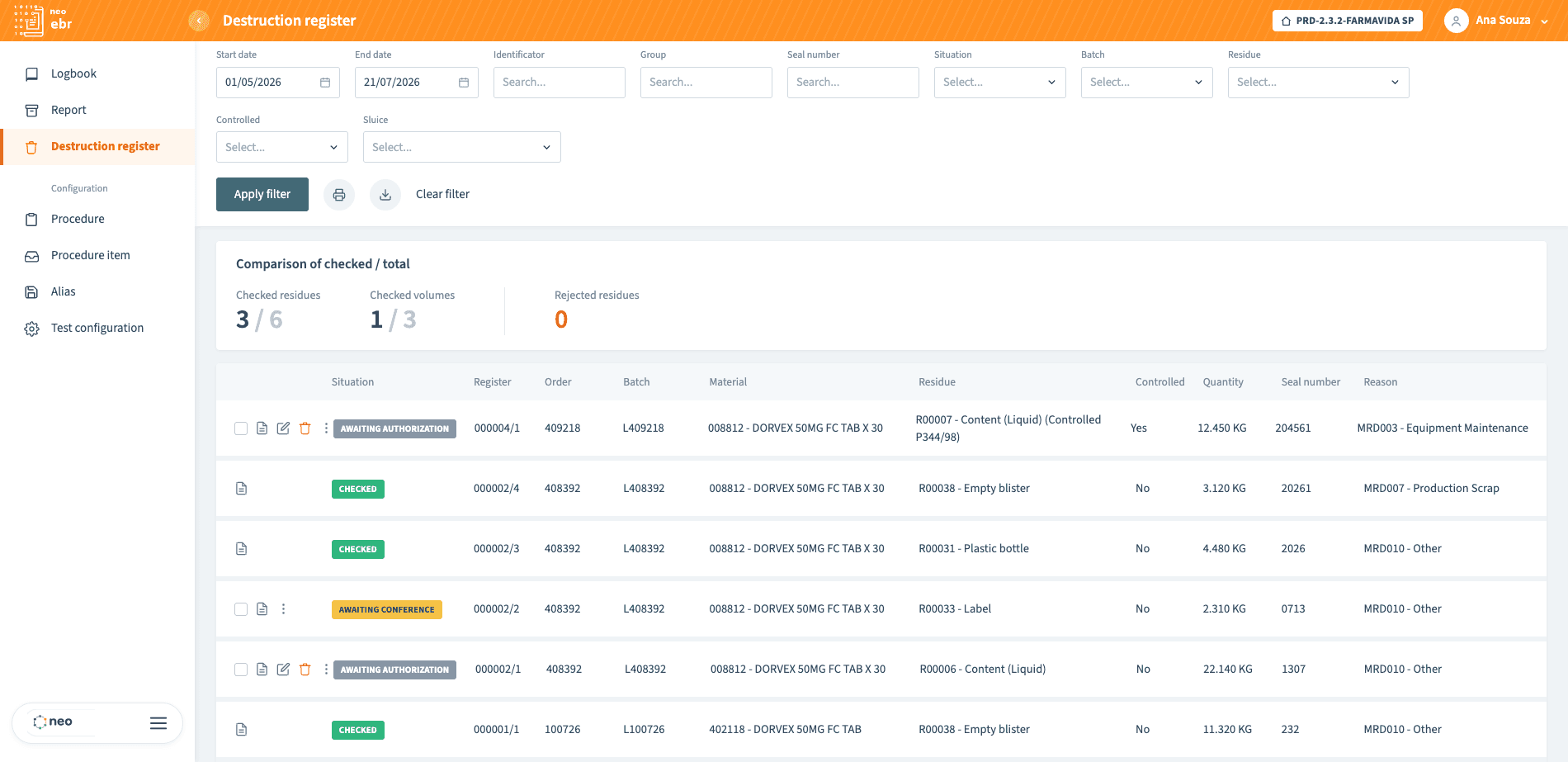
Residues, quantities, seal numbers and reasons captured per batch, with controlled substances flagged and a checked-versus-total count — so material reconciliation is part of the batch record instead of a separate spreadsheet.
What each team gains
- Fewer deviations to investigateBecause errors that would have surfaced at review are prevented at execution instead.
- Evidence instead of assertionA hash-chained audit trail makes "we control changes" something an inspector can inspect.
- Guidance instead of recallThe next step is on screen with its limits, so the procedure does not depend on remembering it.
- Less rework at the end of a shiftNothing to reconcile later, because the record was completed as the work happened.
- Reads from a shared data layerProcess values come from the historian over an open API rather than from point-to-point integrations per equipment.
- Validation scope that follows riskEnforced checks are explicit and testable, so the package can concentrate where patient risk actually is.
- Shorter time to releaseWhen review stops being exhaustive, the release cycle stops being dominated by it.
- Capacity recovered from reworkBatches that would have been reprocessed, and the review hours they consume twice, stop being spent.
Compliance and validation
The batch record carries more regulatory weight than any other document a plant produces, so the properties that make it defensible are architectural rather than procedural.
- Every action is attributable to an individual account, with electronic signature features designed to support 21 CFR Part 11 requirements — a signing PIN distinct from the login password, with its meaning declared at the moment of signing.
- Configuration and data changes are recorded in a hash-chained audit trail with integrity verification, so retroactive alteration is detectable rather than merely prohibited.
- Process values referenced from the historian keep their origin timestamp, which is what makes the record contemporaneous in the sense ALCOA+ means.
- Master records are versioned under change control, so a batch can be shown against the exact procedure in force when it ran.
Qualifying the system for your regulatory context remains your validation activity — our note on computerised system validation under GAMP 5 covers keeping that effort proportional to risk. Both sit inside a wider digital compliance posture, and the paper-to-paperless roadmap sets out where the batch record belongs in the sequence.
Frequently asked questions
What is an electronic batch record (EBR)?+
It is the digital form of the master and executed batch record: the document instructing how a batch is made and capturing what happened while it was made. Unlike a scanned form, it is executable — the system enforces sequence, checks entries against limits and requires second-person verification where the procedure demands it.
What is the difference between an EBR and an MES?+
An MES orchestrates manufacturing broadly — orders, materials, equipment and scheduling. The EBR is the part that runs and records the batch procedure itself. NEO EBR is a module of the wider NEO manufacturing execution platform rather than a separate system.
Does an EBR guarantee review by exception?+
No. It makes it possible. Reviewing only deviations is defensible only when the limits came from the approved specification and are under change control, the process values were captured rather than typed, and the audit trail can evidence the evaluation. Without those, it is a smaller sample of an unverified record.
Does NEO EBR support FDA 21 CFR Part 11 and EU GMP Annex 11?+
It provides features designed to support those requirements: electronic signature with a signing PIN distinct from the login password, a hash-chained audit trail with integrity verification, individual accounts with role-based permissions, and versioned master records. Compliance is a property of a validated system in its operational context, so qualifying it for your context remains your validation activity.
Do we need NEO PI to use NEO EBR?+
No, but the combination is where most of the value is. Without a historian, in-process values are entered by an operator and the record inherits the transcription problem. With one, the control references a measurement that already exists, with its origin timestamp and quality code.
How long does an EBR implementation take?+
It depends on how many procedures are in scope and how much of the process data is already connected — which is why the usual advice is to start with one process area rather than a whole site. Digitising every procedure at once concentrates the risk and delays any visible result.
If most of that time is review rather than manufacturing, the record is the constraint. Talk to our team to assess your procedures, your process data and the GxP requirements in scope.