A warning is not control of a critical parameter

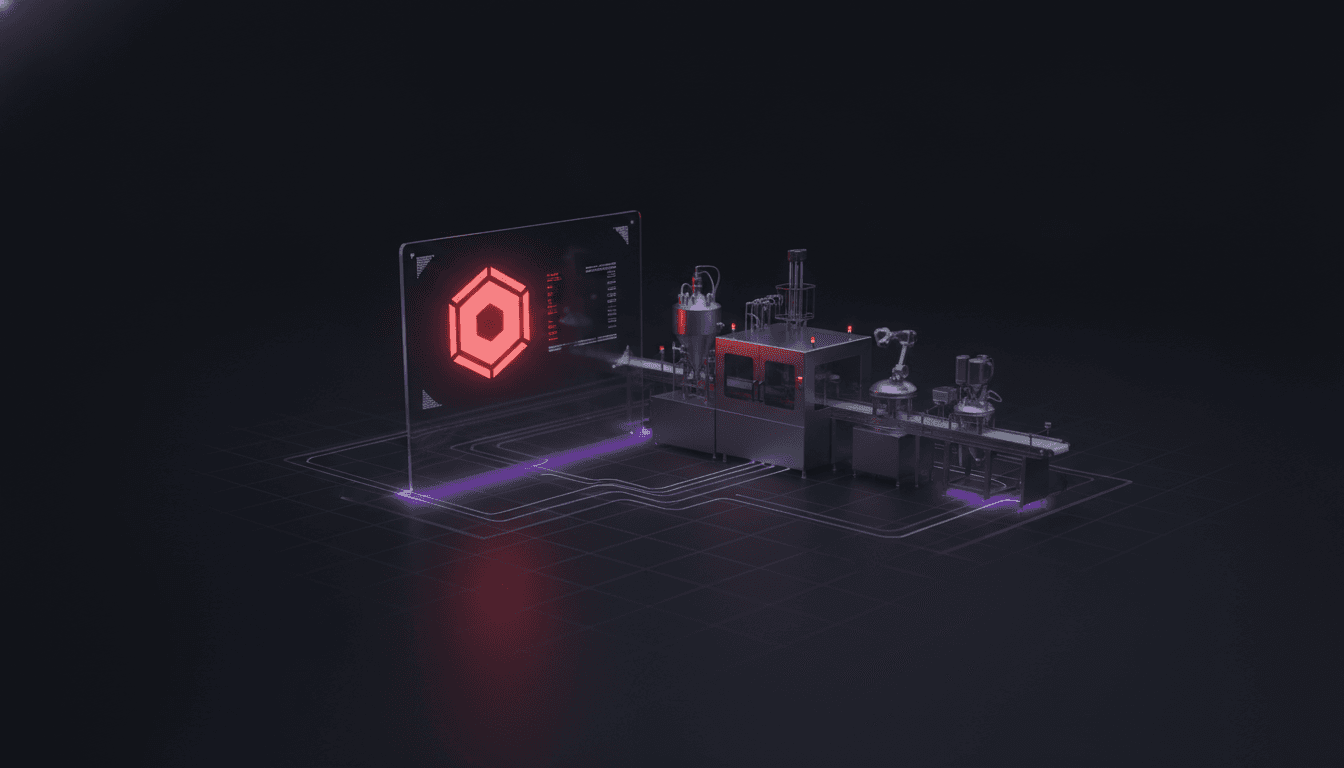
A common pattern in batch record review: the critical parameter went out of range, the system showed a warning, the operator clicked "OK" and the step continued. In the electronic batch record (EBR), everything looks in order: the value is stored, the warning is in the history, the signature is there. Even so, nobody made a decision about the deviation at the moment it happened.
The distinction that tends to get lost is simple. A warning informs and lets the step continue. A block stops the next step until someone with authority records a decision. Both appear on screen the same way, as a message in red. The effect on the process is the opposite.
Where a warning is enough and where it is not
Not every limit needs to stop the line. It is worth separating three situations:
- Informational parameter (room temperature trend outside the alert range but within the action range): the warning is enough, as long as it is recorded and seen in review.
- Critical process parameter (weighed mass out of tolerance, mixing time below the minimum, API with a status other than approved): the system should prevent the next step. Continuing with an out-of-range value is a deviation, and 21 CFR 211.100(b) states that "Any deviation from the written procedures shall be recorded and justified."
- Mandatory sequence (line clearance check before starting, double check before an addition): 21 CFR 11.10(f) calls for the "use of operational system checks to enforce permitted sequencing of steps and events, as appropriate." A warning that can be closed without consequence does not do that job.
Deciding which limit is a warning and which is a block belongs to the process risk assessment, not to the vendor's default configuration.
The cost of a warning that becomes routine
When a warning appears many times per shift, it stops being read. Clicking "OK" becomes part of the step. In review, the reviewer finds dozens of acknowledged warnings and has to reconstruct which ones mattered. Review by exception loses its meaning, because the exception was not handled when it happened.
With a block, the flow changes: the step stops, the deviation is opened with the original value and time, the authorized person records the decision and the justification, and only then does the batch continue. The record reaches batch release with the decision already documented, not with an open question.
What to configure before the system enters operation
- A list of the critical parameters in each recipe, each marked as warning or block, with the justification in the risk assessment document.
- Who can unblock the step, with which role in the system, and what has to be recorded (reason, deviation reference).
- A test during validation: an out-of-range value on purpose, to show that the step really does not continue.
- Any change from warning to block, or the reverse, always through change control, never as a configuration tweak on the floor.
For your plant
Take the three most critical parameters in your main recipe. Today, if one of them goes out of range, does the system warn or does it stop the step?
References (checked against eCFR, 10/26/2026): 21 CFR 211.100(b) — deviations recorded and justified; 21 CFR 11.10(f) — operational system checks to enforce permitted sequencing of steps.
Practical writing on GxP, MES, data integrity and shop-floor systems. A few times a month, no noise.