ICH Q12: lifecycle without revalidating the world
Every plant knows the feeling: a small process improvement — a slightly tighter range, an alternate site, an analytical tweak — and suddenly the calendar runs the life. Variation, dossier, queue, revalidation that seems to reopen the universe. Part of that weight is real and necessary. Part comes from not distinguishing, clearly, what is an established condition of the product and what is supportive information.
ICH Q12 (Technical and Regulatory Considerations for Pharmaceutical Product Lifecycle Management), final at Step 4 on 20 November 2019, exists to make post-approval CMC change management more predictable and efficient across the commercial lifecycle — in dialogue with Q8(R2), Q9, Q10 and Q11. It is not a wand. It is a framework. And on the electronic floor, it only helps if the plant knows what actually changed in the system of record.
The problem Q12 tries to address
Supply-chain globalisation and differing regional rules made post-approval a maze. Q12 offers common language for:
- Established Conditions (ECs): information considered necessary to assure quality and that, if changed, requires submission/communication under the applicable framework;
- supportive information: what may change under the PQS without the same kind of submission, when well delimited;
- PACMP: a protocol agreed with the authority to prepare and verify future changes with more predictability;
- PLCM document: repository of the lifecycle plan (ECs, reporting categories, PACMPs, CMC commitments).
The implicit promise — and it is worth saying "implicit," because regional implementation is not uniform (see EU vs FDA asymmetry below) — is lifecycle with less theatre and more science + PQS + regulatory dialogue. Without revalidating the world for every screw.
ECs: what changes (and what does not) when the system is electronic
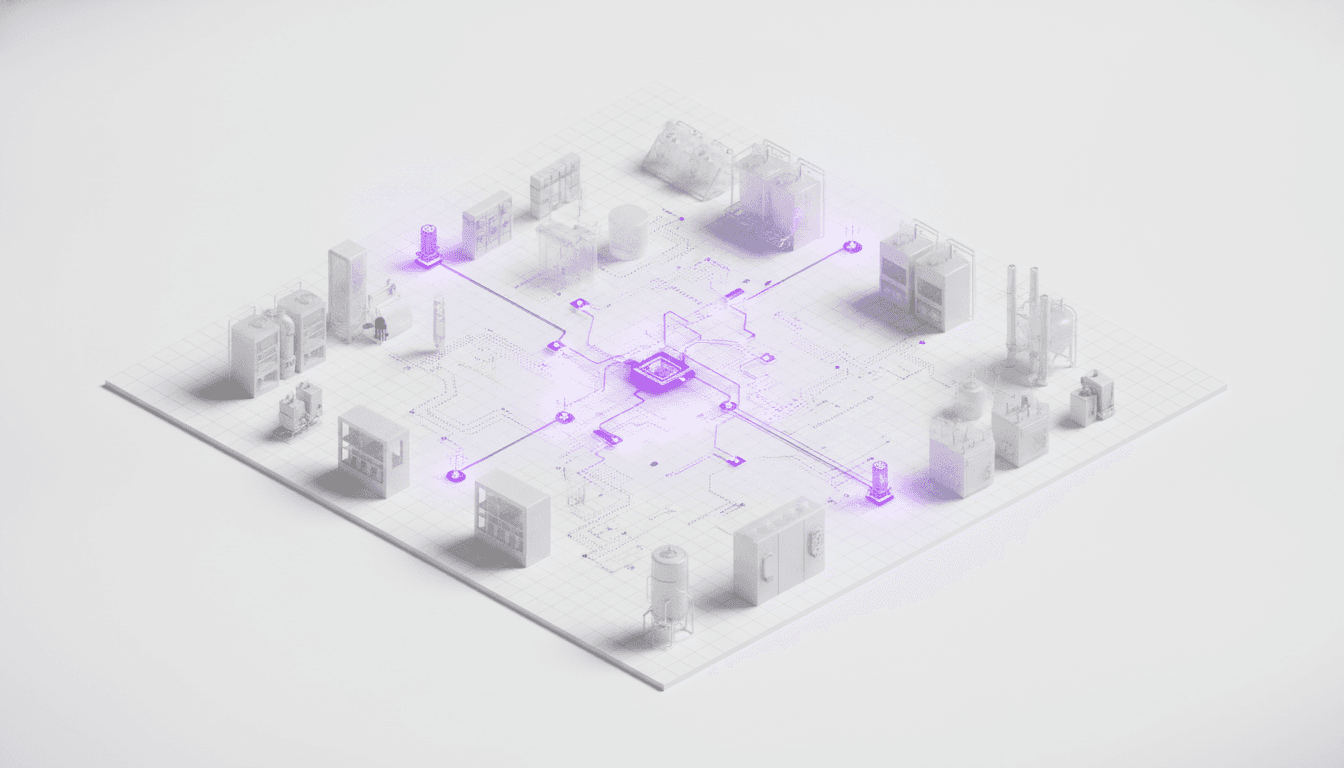
On paper, the master recipe and the dossier already competed for attention. Electronically, a third surface appears: configuration of the EBR/MES — limits, gates, sequence, exception rules, integrations.
Q12's floor question becomes:
- Which recipe and control elements are ECs (or map directly to ECs)?
- Which are supportive / operating parameters under the PQS?
- When someone changes configuration, does that touch an EC, only the PQS, or both?
If the plant lacks that distinction, two opposite failures appear:
- Everything becomes a "variation." Improvement freezes. People work around it. The workaround enters nobody's PLCM.
- Nothing becomes an EC in practice. Configuration changes in silence; the dossier falls behind; inspection finds two truths.
An electronic system does not solve regulatory classification alone. It makes classification enforceable: master version, diff of what changed, trail of who approved, link to change control. Without that, Q12 on the slide and chaos in the MES admin.
PACMP without romance
The Post-Approval Change Management Protocol is a prior agreement: which change, how to assess impact, which studies, which criteria, which suggested reporting category. It can cover one change or a set; one product or, in certain designs, multiple — always under what the authority approved.
For Quality and Regulatory Affairs, the PACMP is predictability. For the plant, it is advance discipline: if the protocol assumes certain controls and evidence, the system of record must be able to produce that evidence without a scramble. Otherwise the PACMP becomes another document operations cannot meet on time.
PLCM: map, not a drawer
The Product Lifecycle Management document (in the Q12 sense) concentrates ECs, categories, PACMPs and commitments. It only works if it is updated when life changes — and if it points to where operational truth lives.
In a digital plant, "updating the PLCM" without updating the versioned master recipe is coordinated theatre. Both need to talk. The PLCM does not replace the PQS (Q10); it rests on it. Q12 is explicit about complementing Q10 in commercial post-approval.
What "without revalidating the world" does not mean
Worth the early antidote, so this does not become overclaim:
- It does not mean ending validation/qualification when risk requires it.
- It does not mean an EC changes "with an IT ticket alone."
- It does not mean every jurisdiction treats each EC the same way on the same timeline — regional implementation matters; local regulatory must be at the table.
- It does not mean the MES "is Q12 compliant" as a seal. Q12 is about the MAH–authority relationship and about the PQS; software is a tool for evidence and control.
The useful sentence is another: with clear ECs and a strong PQS, many changes stop being existential surprises — and gain a known path (including a regulatory path when an EC actually changes).
Bridge to what we already wrote in the ICH series
- Q9: classifying change impact as EC versus supportive without reopening risk is an elegant guess.
- Q10: Q12 assumes a PQS able to manage change; an org chart is not enough.
- Q8/Q11 → floor: design space and control strategy feed the conversation of what can be an EC and what remains under process control — provided the EBR enforces what development assumed.
Without those bridges, Q12 becomes an isolated Affairs course.
Where the system of record truly helps
Without selling miracles, what usually helps:
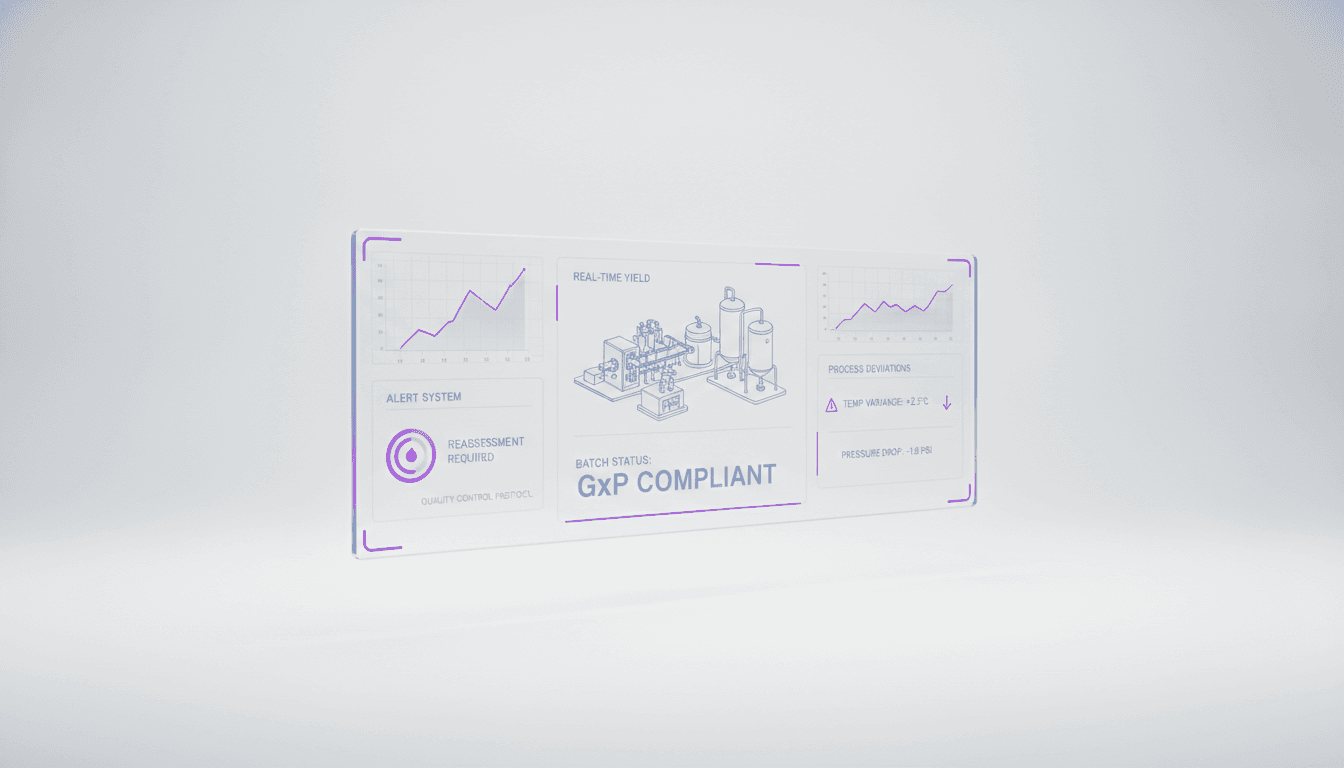
- Versioning of recipe and control rules with a readable diff for Quality and RA — not only an opaque "publish."
- Change control that forces classification: touches EC? touches dossier? PQS only? reference to PLCM/PACMP when one exists.
- Trail of critical configuration (limits, gates, sequence) with the same rigor paper MBR demanded.
- Batch → master version link to prove what was in force when the batch ran — basis for any lifecycle discussion under inspection.
Platforms such as NEO EBR enter here as the system of record for execution and change — not as a substitute for dialogue with the authority.
Regulatory uncertainty (for Soc and RA)
Details of variation/supplement category (ANVISA, EMA/EU, FDA, and others) change in form and timeline. Q12 offers a common framework (ECs, supportive, PACMP, PLCM); it does not homogenise local practice. In particular: implementation of ECs and recognition of a PLCM document vary across regions — FDA has advanced with implementation guidance; in the EU, the legal variations framework prevails over the guideline, and Q12 tools not provided for in that framework are not used as a "textbook" operational shortcut. Legacy product may not have ECs in Q12 format. The relationship approved design space ↔ ECs is case-by-case with RA. This article is educational; it does not replace regulatory assessment or MAH–authority conversation.
Points that remain open in practice:
- Not every legacy product will have ECs in "Q12 textbook" form; the transition is regulatory work, not only IT.
- The relationship between approved design space and ECs needs case-by-case reading with RA — this article does not replace that analysis.
If anything here is used in conversation with a regulated customer, local checking is the door, not a detail.
A practical sequence (plant + RA)
- Pick a pilot product. List what the team today treats as untouchable without variation — and what changes "only in the factory." Compare with EC versus supportive logic.
- In the MES/EBR, inventory the last six months of configuration changes to limits/sequence. How many had formal change control? How many would have touched an EC?
- If there is (or there is a plan for) a PACMP, write which evidence the system of record already produces — and which still need a scramble.
- Adjust the change form: explicit field for EC/PLCM impact, with auditable "not applicable."
- Only then talk about "lifecycle agility." Agility without a map is only haste.
Closing
ICH Q12 does not promise lifecycle without work. It promises — in the framework — lifecycle with a map: what is an Established Condition, what the PQS covers, what a PACMP already agreed with the authority. In an electronic plant, the map only holds if system-of-record configuration is as governed as the dossier it executes.
Without that, we keep revalidating the world — or, worse, changing the world without noticing. The difference between the two usually sits less in the Q12 slide and more in the last hard gate someone changed "just a little" on Friday.
Practical writing on GxP, MES, data integrity and shop-floor systems. A few times a month, no noise.